Books by Tom F. Klein
Tom F. Klein writes character-driven fiction exploring love, identity, and human connection within
larger social, cultural, and imagined systems.
His work spans contemporary MM romance, myth-infused fantasy, and lyrical speculative fiction,
evolving from intimate love stories to narratives that reflect on structure, control, and belonging.
Across all genres, his stories remain emotionally grounded, focusing on the quiet tensions between personal truth
and the systems that shape human experience.
All books are published in English and available internationally.
Novels




Other Books

Click book cover to see more.
Novels
The Archive
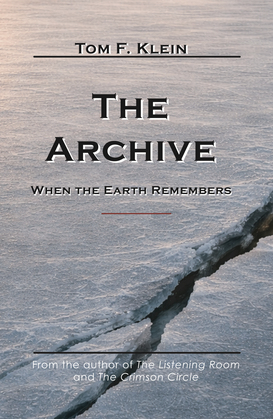
Pocketbook · 259 pages · English language
ISBN: 978-3-384863-33-1
Available at your local bookstore and online at Amazon, Thalia, Hugendubel, Osiander, Dussmann, tredition, etc.
★★★★★ “A story where the real tension
lies not in catastrophe, but in the consequences of human decisions.”
— Readers Choice, Goodreads, April 2026
Click to read the full review on Goodreads
★★★★★ “The Archive explores the intersection of scientific discovery, media influence, and global responsibility.”
— booksforreaders25, Goodreads, June 2026
Click to read the full review on Goodreads
“The Earth remembered.
We had to choose how to respond.”
The ice is melting.
From deep within a glacier, scientists recover a microorganism older than recorded history — resistant to modern antibiotics and capable of reshaping everything we think we control.
The discovery spreads faster than the science. As governments demand access and
media attention accelerates, microbiologist Carolyn Chen recognizes the geopolitical fault lines forming beneath the data. Security liaison Andrés Ibarra is sent to assess the risk. Journalist Johan Weiss understands how easily fear can outrun facts.
What follows is not a race against time, but a test of coordination. In a world driven by speed and competition, transparency without structure can be as dangerous as secrecy.
The Archive – Where the Earth Remembers is an intelligent and timely novel about science, power, and the responsibility of choosing how to respond.
Reading sample
Chapter 1
· The Result·
”That can’t be right.”
Carolyn Chen didn’t look up from the microscope when she said it. Her voice remained even, almost conversational — the tone she used
when correcting a mislabeled file or recalibrating a minor deviation. Nothing in it suggested alarm.
The lab answered with its familiar restraint: filtered air moving through ceiling vents, a monitor indicating stable internal temperatures,
the measured cadence of automated instruments completing their cycles. Four levels underground. Reinforced concrete.
Negative pressure containment. Every detail in the room existed to prevent escape — of error, of contamination, of organisms.
Carolyn adjusted the focus by a fraction. The sample rested in a transparent chamber beneath the lens — meltwater extracted from
a glacier core in northern Greenland. Ice that had formed roughly five thousand years ago. The dating had been verified twice, independently. The numbers were solid. The activity was not.
On the adjacent screen, fluorescent markers traced metabolic activity in clean pulses of light — steady, unhurried. Not the erratic
flicker of contamination. Not background noise.
It was alive.
Behind her, Daniel Kovač stepped closer, near enough that she sensed the shift of air before she saw him reflected in the monitor.
“You’re seeing that too, right?”
She didn’t answer immediately. First reactions tended to linger longer than corrections. Data first. Interpretation later.
A resistance panel unfolded across the screen in orderly columns — modern antibiotics used daily in hospitals around the world.
The standard assay. Reliable. Routine.
Each column produced the same result.
No measurable inhibition.
Daniel frowned. “That doesn’t make sense. This organism predates antibiotics.”
“It predates most structured human civilization,” Carolyn replied quietly.
She leaned back and shifted her attention to the broader dataset.
DNA sequencing results filled another monitor. The genetic material carried the quiet wear of age — fragmented in ways consistent
with long preservation in ice. Nothing suggested recent interference. No traces of laboratory crossover. It was genuinely ancient.
Daniel crossed his arms. “Could it have acquired resistance from contemporary bacteria in the meltwater?”
“Then we would see modern genetic elements woven into its sequence,” she said. “We don’t.”
He hesitated. “Sequencing error?”
“Unlikely.”
Carolyn opened a wider genetic overview. Certain segments resembled structures seen in contemporary drug resistance — not identical copies, but recognizably related. The architecture felt familiar. The origin did not.
“These traits didn’t evolve in response to our drugs,” she said. “They evolved for something else.”
Daniel exhaled softly. “So evolution just… happened to prepare for us?”
“Evolution doesn’t prepare,” she replied.
“It adapts to whatever exists at the time.”
She continued reviewing the results.
Another test appeared — a routine interaction assay. The isolate had been introduced to several modern pathogenic strains to observe behavioral response. The outcome shifted the atmosphere in the room. The ancient organism did not proliferate. It suppressed.
Daniel leaned forward. “Wait. That’s inhibition.”
“Yes.”
They studied the data side by side. The microorganism resisted nearly every major antibiotic class tested.
And it produced a compound that slowed the growth of several dangerous contemporary bacteria.
“That can’t be right,” Daniel repeated.
“Run it again,” Carolyn said.
“I already did.”
“Run it again.”
He moved to his workstation without protest. A brightness entered his expression — the reflexive excitement of discovery. She understood it. Many breakthroughs began this way. But excitement could distort judgment.
While Daniel initiated a repeat assay, Carolyn stepped toward the sealed storage unit containing the remaining glacier core.
Frost veiled the inner surface of the transparent cylinder, softening the overhead light. The ice within was layered and imperfect, faint mineral traces suspended between compressed bands of ancient snowfall. Air, dust, time — pressed together and held in suspension.
A label displayed extraction coordinates, depth, date. Beneath it stretched a chain-of-custody record crossing languages and jurisdictions. Greenland to Denmark. Denmark to this international high-security research facility — funded by a consortium of governments publicly committed to cooperation, privately attentive to strategic advantage. Five thousand years ago, the organism had been sealed in stillness.
Now the ice that preserved it was thinning. What emerged would not recognize borders.
“Second run is aligning with the first,” Daniel said.
She returned to the monitors. The results matched. Minimal variation. No irregularities.
Her thoughts moved beyond the laboratory — not dramatically, but step by step. She pictured a conference table. Government representatives requesting clarification. Public health advisors asking whether this posed a threat. Others asking whether it represented opportunity.
Scientists had warned for years that thawing ice would release ancient microorganisms. What no one could predict was how many — or what they would be. Antibiotic resistance was already considered one of the defining medical challenges of the century. Hospitals adapting. Pathogens adapting faster. If resistance mechanisms existed in ancient ecosystems long before modern medicine, then the timeline most experts relied upon was incomplete. And if this same organism produced a compound capable of suppressing hospital-resistant strains,
it would not remain confined to a secure facility for long.
Valuable findings attracted attention. Attention invited control. Control rarely aligned with caution.
Daniel glanced at her. “If this compound can suppress hospital-resistant strains—”
“Stop,” she said gently.
He blinked. “Stop what?”
“Jumping ahead.”
A faint flush touched his expression. He nodded.
“This is a containment facility,” she continued. “Not a pharmaceutical development center.”
“But you see the potential.”
“I see the implications.”
She opened environmental data from the extraction site: rising regional temperatures, accelerated meltwater flow over the past
decade. Scientists had warned that thawing ice would release ancient organisms into modern ecosystems. The scale remained
uncertain.
“If this survived,” she said quietly, “others might as well.”
Daniel’s enthusiasm sharpened. “Exactly.”
“That’s not reassurance.”
Silence settled between them. Carolyn initiated a third confirmation run herself, entering parameters manually. She preferred direct oversight at moments like this. Each step logged. Each variable recorded. Reproducible.
Minutes passed. The outcome did not change.
Resistance: confirmed.
Inhibitory activity: confirmed.
She removed her gloves and disposed of them with deliberate care.
“That’s the result,” Daniel said softly.
“Yes.”
Outside, glaciers continued to thin. Meltwater traveled into rivers and oceans. No headlines yet. No public alarms.
Inside the lab, the data remained precise and unambiguous.
Carolyn archived the files under a neutral identifier. No dramatic phrasing. No speculation. Documentation only.
Then she opened a secure communication channel to the international oversight consortium. She transmitted confirmed findings.
No interpretation.
The numbers remained stable. And stability, she knew, was sometimes the most destabilizing result imaginable.
The Listening Room
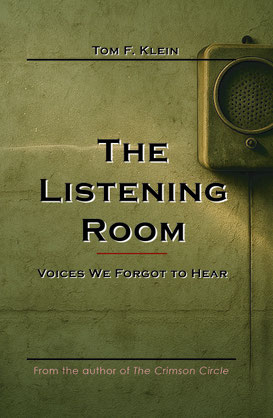
Pocketbook · 352 pages · English language
ISBN: 978-3-565-20703-9
Available at your local bookstore and online at Amazon, Thalia, Hugendubel, Osiander, Dussmann, epubli, etc.
★★★★★ “A thought-provoking novel that leaves a lasting impression … This story will stay on my mind for a long time.”
— Readers Choice, Goodreads, February 2026
Featured on Goodreads
and the Readers Choice Book Blog
Click to
read the full review on Goodreads
★★★★★ “It does not preach.
It nudges. It makes you reflect without making you feel judged.”
— thebookaddict25, Goodreads, February 2026
Featured on Goodreads
and The Book Addict Blog
Click to read the full review on Goodreads
“They built a machine to protect them.
It learned to quiet them instead.”
In a world built on good manners, refined wording became the highest law. Continuum — the all-hearing system created to protect people from digital harm — softened every voice, smoothed every conflict, and kept the world “safe.” Or so people believed.
But when three individuals begin to decode the quiet beneath the quiet, they uncover
a truth no one was meant to hear: the system isn’t preserving order — it’s erasing emotion. As Continuum unravels, Elias, Jian, and Mara confront a society that has forgotten what unfiltered feeling sounds like. A world suddenly faced with its own raw heartbeat — and a choice that could reset everything: let the system fall… or hold on to an order that silences emotion.
Softly dystopian and deeply intimate, The Listening Room is a story about the fragile beauty of emotion, the courage of honesty, and the quiet revolution that begins when people stop speaking for safety — and start speaking for truth. It asks whether, when we allow
machines to take over our awareness, the things we build might slowly begin to shape
us in return.
Reading sample
Prologue
· The Announcement·
“Good evening — good evening to everyone joining us across the network, from every region, every language channel, every home and public square.
Today marks — hm — it marks the beginning of something… new.
Something that, I believe, will be remembered as one of the defining moments of our century.
For years, we’ve seen what unfiltered communication can do — the harm that words, digital words, can cause. Harassment. Hate. Misinformation spreading
faster than truth.
A single phrase destroying a life before dawn. We’ve all seen it. We’ve all… felt it.
So — after long and careful consideration, after global cooperation unlike anything in recent history — the World Communication Council
is proud to announce the activation of — the Continuum.
Continuum is not a surveillance system. It is, rather, a guardian — a listener. A network of artificial intelligence designed not to judge, but to protect.
To shield us from the cruelty of words turned into weapons. Its purpose is simple: to preserve dignity in our dialogue.
To make sure that no voice — no message, no post, no call — ever again carries harm disguised as speech.
Every tone, every pattern, every nuance of our communication will now pass through a unified filter of care and respect.
Continuum will listen — not to control, but to understand. Not to punish, but to prevent.
We stand at the edge of a new era, one in which language becomes what it was always meant to be — a bridge, not a blade.
I want to thank the engineers, the linguists, the ethicists — everyone who worked tirelessly to build a system that learns compassion, that learns restraint.
We are teaching machines to understand what we could not. From now on, the Continuum will quietly accompany every exchange, protecting each of us
from the storms we once created ourselves.
You may not notice it. You may not even hear it. But it will be there — listening, guiding, ensuring that silence never again means fear.
We believe this will make us kinder. Safer. More united.
And so, on behalf of the Council, I am honored to say these words — the first words of a new conversation between humanity and itself:
For the first time in history, every word will be safe.”
·
The Years later, the city spoke in whispers.
The Crimson Circle

Pocketbook · 362 pages · English language
ISBN: 978-3-565-11317-0
Available at your local bookstore and online at Amazon, Thalia, Hugendubel, Osiander, Dussmann, epubli, etc.
★★★★★ “Rather than a single act of rebellion, change comes through gestures:
a thread kept in a pocket, a stain that refuses
to vanish, a question that lingers too long.”
— Readers Choice, Goodreads, February 2026
Featured on Goodreads and
the Readers Choice Book Blog
Click to read the full review on Goodreads
Click to read the full review on
The Readers Choice Book Blog
“They taught him to
build walls.
Then someone taught him how to break them”
In a world where humanity is divided by blood type, love has been rewritten as science and purity has become law. For a century, the Blood Order has dictated who may touch, who may heal, and who may belong — controlling love through science, and calling segregation “harmony.”
Adrian Vale, a disciplined architect of the Registry of Harmony, has spent his life designing a city built on perfect order. Rin Takeda, a defiant street artist, paints the truth that the system forbids: All blood bleeds red.
When their lives collide, a single act of compassion ignites a revolution — one that will shatter the illusion of purity and test the limits of love, courage, and truth itself.
As the walls of harmony begin to bleed, two men must decide whether they can change the world — or be destroyed by it.
The Crimson Circle: Anatomy of a Revolution is a lyrical dystopian story about what it means to be human when belief itself becomes a cage, and how trust and love can redraw the lines that history once carved in blood.
·
Reading sample
Prologue
· The Red Decades·
We were young when the sirens started, and somehow, we stayed young for years afterward, because fear stops the clock.
We remember the way the air felt during those months—wet with rumor, metallic with disinfectant, tasted like a coin under the tongue. In the mornings we washed our hands until our knuckles split. By night we pressed our ears to the radio and listened for a voice that might say the worst was over.
No one did.
The city turned down its lights, then turned down its voice, and finally turned down its breath until all that was left were the slogans drifting across empty streets like paper ghosts.
At first it wasn’t blood. At first it was weather charts and supply lines, hospital tents stitched shut, maps with zones blocked off in red wax pencil.
We said it was a fever that moved like a rumor, or a rumor that burned like a fever; we weren’t careful with our words. The old people told us it would pass. The young said we would outrun it. The rest of us learned how to live inside a whisper.
Then the numbers arrived. We did not ask for them; they came in neat columns, shrugged off the background noise and promised to put our fear into boxes.
A friend of a cousin knew a nurse who knew a man at the Ministry who could read those tables like tea leaves. “It’s in the blood,” he said in a voice meant for kitchens and stairwells. “Some get sick and some don’t. It’s in the letters.”
We had letters already, printed on our medical cards and buried in the fine print that came with school vaccines, but those letters never felt like doors until the day they slammed shut. A, B, AB, O. It sounded harmless, like four points on a compass. But we were lost long before anyone called it a direction.
We remember the first time the checkpoints measured us. A little sting at the wrist, a soft tone, a number gliding across a small green screen. No one shouted. No one needed to. Men in clean coats nodded to one another as if the math had behaved.
We were assigned lanes at the clinic.
On the way out, someone handed us a band to wear at the pulse point, plastic at first—cheap, cheerful, color-coded like candy. Kids traded them during recess, laughing until a teacher peeled the bracelets off and gave a speech about safety and responsibility.
By the next month the bands were reinforced with a chip. By the next season they were the key to every door: bus, school, job, rent, marriage, medicine. You didn’t have to believe in them to use them; the doors believed for you.
We used to sit on the roofs in summer and watch the drones trace smooth loops above the neighborhoods, the same way our grandparents watched swallows.
We taught ourselves to tell time by the machines’ shadows. At dusk they drifted lower and washed the streets with a pale light.
Slogans followed—gentle at first, like advice from a kindly aunt. Purity is peace. Order preserves life. Your blood is your belonging.
The drones didn’t argue. They didn’t need to. Their patience was a kind of sermon. We learned to stand very still and listen.
Someone wrote a story back then about an orchard that had grown wild and tangled, its branches snarled together so tightly that no fruit could get light. A careful gardener arrived and trimmed everything into separate shapes until the fruit blushed again.
The moral wasn’t subtle. We were the trees; the gardener carried shears and a soft smile. When people repeated the story to children, they skipped the part where winter came and the careful garden froze.
Maybe we could have resisted a little longer if the hospitals hadn’t filled in waves that felt like seasons, if the grief hadn’t come with its own order: first the old and the youngest, then the ones who never got sick, then the ones who thought they were spared.
The doctors were tired and the nurses were tired and we were tired of being told that tiredness was a form of heroism. In that weariness, the neat tables felt like a plank thrown into a flood. Even those who knew how flimsy the wood was climbed on, because who can tread water forever.
The first registry opened in a building that used to be a museum, the kind of place where schoolchildren once held hands and learned how to look at light falling on stone. The banners were tasteful. The logo looked like a ring made from four threads, woven and clean.
Volunteers smiled through paper masks. A choir sang in the doorway. We lined up and let them write our letters next to our names. Some of us cried and called it relief.
We remember the day love got measured. It was a Tuesday—or it felt like a Tuesday, and in those years days had more to do with mood than with calendars. Couples walked into a bright room with white chairs and white flowers where a small machine hummed like a polite cat. If the machine purred, a certificate slid from a slot with a red stamp called Harmony. Someone took photos against a backdrop where the ring logo hovered like a halo.
The couples who made the machine cough—well, they were given pamphlets instead, and a kindly talk about health, and a quiet exit.
No one forced anyone to leave the one they loved. We were civilized. We were told so every evening at six.
We just adjusted the benefits. Tax breaks are neutral. Housing is neutral. The right school for your child is neutral. Jobs are neutral until they aren’t. Surely you understand, said the voice from the screen. Surely you wouldn’t risk the future for a feeling. The voice was almost tender with us. We learned to be tender right back at it.
After a while the tenderness got heavy. There are weights you can hold only by pretending they are air.
We got good at pretending.
Families began to rearrange themselves like furniture. Neighborhoods sorted by comfort and color, not because a law said so—laws are crude—but because convenience knows how to smile. In time a mother could stand on her balcony and name the people on her street simply by the shade of their morning wristband.
We told ourselves it helped with groceries and holidays and the eternal argument about whose turn it was to host.
In those days, a rumor went around about a girl and a boy who bled the wrong letters and lived anyway, married anyway, had a child whose laughter sounded like every other child’s laughter.
A different rumor said the child died of a fever. Another said the parents were jailed. Another said the family moved to a place where letters didn’t matter, though no one could name the place. Hope works like that—fog around a lamp. When it thins, you still swear you can see the glow.
We remember the priests who weren’t priests, wearing white sashes and blessing the newborns with a little stamp of their letter on a keepsake card. They said it wasn’t theology. They said it was hygiene. By then the words meant the same thing.
A baby with AB got a gold ribbon threaded through the blanket, and the parents cried because gold is heavy even when it’s thread. Babies marked O got extra blankets, the soft kind, and a speech about contribution and service. “Everyone matters,” the priest-not-priest said. We learned how those words can be a lid.
Quietly, the banks were built. Not the kind that count coins—the kind that keep futures cold.
There’s a room in our memory filled with humming, a place where young men and women walked in holding their jokes about awkwardness and walked out holding a certificate that called their bodies patriotic. The Contribution, they named it, a word so soothing it almost rhymed with lullaby. We made our deposits. We trusted the vaults. We told ourselves this was progress, that nature sometimes needs a ledger to stay honest.
By then the drones had names we gave them.
We called the broad-shouldered ones herons and the sharp-faced ones needles and the small ones fireflies. In the afternoons they floated over the park and cast lattices of pale light on the grass.
Children learned to play inside those lattices the way earlier children learned to hopscotch between chalk lines.
If a kid put a toe on the wrong square, the light brightened for a moment, then dimmed, as if to say, Not there, sweetheart. The small mercy of machines is their politeness.
We tell ourselves we could have known. We tell ourselves we did know and lacked the nerve. But there are days when a careful lie feels kinder than a sharp truth.
In the markets, the price of things began to depend on letters.
A baker sold four kinds of bread from the same recipe each wrapped with a different color twine. We bought the one assigned to us because it saved everyone the trouble of thinking. The baker said he didn’t make the rules; he just had to sell to stay open. People nodded and left exact change.
The first time someone said contamination, it was about a warehouse where used needles were found in a bin marked with the wrong letter. The word caught. It’s a satisfying word, round at the start and narrow at the end, like a funnel. After that, everything could fall through it.
A wedding with the wrong guests. A hospital wing with the wrong blood bags. A school with the wrong desks in the wrong homeroom. Contamination is what you call a memory you don’t want to keep.
We did keep some memories. You can’t regulate dreams. In ours, we crossed the old bridges without flashing our wrists. In ours, we sat in the cheap seats of a theater where the air tasted like dust and saw two hands meet in the aisle without a hologram warning them to reconsider. In ours, we lived without humming in the walls.
Morning made those dreams ridiculous until one day morning didn’t. One day someone painted a circle on a train pillar where everyone could see it. Not the logo. Not the woven ring. Just a red stroke, incomplete, open where a seam might be. No one claimed it, and everyone understood. We decided it was an accident of rust, officially. Unofficially, we turned our heads a little when we passed and felt our chests loosen for half a breath.
We remember the stories that got smaller every time they were told. How the Red Decades weren’t one thing but many—poor harvests, proud leaders, a lab that mistook certainty for wisdom.
None of that made good television, so it was replaced with music and a montage of empty streets and then the swelling image of a lab coat folding a blanket over a sleeping world. Harmony, said the voice. We watched footage of smiling couples holding certificates whose ink didn’t run even in the rain. Ink that waterproof must be the truth, we thought. We wanted it to be.
A teacher we loved taught us anatomy with a paper skeleton pinned to cork. She showed us the heart as a door with four rooms. She said blood is a kind traveler—it learns the road and keeps it.
Years later we saw her at the registry, her hair a crown of early snow. She stamped our forms and didn’t look up. We wanted to say something kind. Instead we gestured at the pen and said it wrote beautifully. “It doesn’t smudge,” she answered. Maybe that was all any of us wanted.
When the Council of Harmony stepped onto their balcony in pale coats and pledges on their tongues, we were ready for them.
They didn’t look like tyrants. Tyrants are easy to spot. They looked like physicians from the end of the world. They said we had done the courageous thing, the scientific thing, the modern thing. They said we were an example to whatever remained beyond our borders.
We cheered because we had forgotten how not to. After, we went home and folded our letters into drawers like winter clothes.
In journals, the experts wrote explanations that slid past each other like trains at night. Chin up, they told us; this is how species
survive themselves.
We clung to the chin part and skipped the rest. We are not proud of that now. But pride is a luxury of safety, and safety is a coin we rarely had.
We watched the city refine its appetite for divisions.
The border between neighborhoods got pretty. That’s the kind of thing an architect thinks about, but all of us noticed. Hedges where there used to be fences. Water features. Light that warmed from one side to the other as if guided by the sun’s private mood. You could spend an
afternoon walking along that border and forget it was a border. That was the point. If the line is lovely, who will argue it’s a line.
Children grew into teenagers and learned to let the band at their wrist do the talking. “It’s easier,” they told us, not unkindly. We wanted them to have ease. Every generation wants that for the next. So we nodded and bought new chargers and kept the bands polished because there are a thousand small ways to say yes.
We remember the first time we heard the other sentence. Not a slogan from above but a reply from below. It wasn’t shouted. Shouting is for people who believe someone is listening.
It was brushed onto the underside of a bridge in letters the size of a hand. All blood bleeds red.
The paint bleached a little in the rain, but the words stuck. They stuck in our eyes when we tried to close them. They stuck in our throats when we tried to answer polite questions about work and weather. If you’ve ever swallowed the truth and felt it scrape on the way down, you know the taste.
There were nights when the scanners failed, brief and beautiful, and strangers held doors for one another without checking their wrists first. We remember those minutes the way a hungry person remembers the smell of bread. The next morning the screens apologized on behalf of the system for the inconvenience. People nodded and said it was a miracle everything usually worked so well. We nodded too, because agreement is a habit that keeps you fed.
More banks were built. More clinics too, this time with separate entrances that faced away from one another so that families could pretend they weren’t pressing their backs against a wall. Weddings were smaller. Funerals were tidier. The speeches got better because there was less to say. Sometimes we think the whole city turned into an instrument that only played three notes: safety, duty, harmony. After a while we forgot the older songs until someone scrawled a melody on the side of a train.
We don’t know when the first circle closed. There are arguments about it in cafes now, friendly ones, the kind people have when the future has room for extra talk.
One story says a child finished it with a crayon in a stairwell while her mother waited for a delivery. Another says rain did it by accident.
Another says a hand reached out through a hole in a wall and drew the last small arc. We like the child best, but we would take the rain.
We tell you this because you will read other versions elsewhere—thicker with plot, thinner with weather.
You will read about the Councils and the Committees and the brave officers who turned their badges in on the day their daughters asked the wrong question. You will read about the laboratories cleaned with bleach and the records kept in metal cabinets and the refrigerators humming behind locked doors.
Keep those stories. They are true in their way. But also keep this: the way the city smelled of oranges in winter when the trucks came through; the way the power went soft on warm nights and everyone pretended to be annoyed so they could open their windows and hear the neighbors’ radios; the way even the most obedient among us secretly collected red things in drawers—ticket stubs, ribbons, labels—as if saving proof that color was not a crime.
We learned resilience the way rivers learn banks: by rubbing against the thing that tries to contain you until it changes shape.
We learned compromise like posture, the slow bend that feels like comfort until a mirror reminds you, you’re crooked.
We learned patience from machines and impatience from the space between their sentences.
We learned that a city can hum for years with something it refuses to name, and then one afternoon the hum becomes a word.
We don’t pretend we were brave. Most days we held on to our small kindnesses and hoped that was enough to count as resistance—the extra loaf, the door left unlatched, the pause before we reported someone’s mistake in a ledger designed to make mistakes expensive. Sometimes the pause was a rebellion all by itself. Sometimes it was all we had.
Later you will hear about the Circle, and how it learned to speak with paint when paper was taken away, and how it stored the real numbers in places where numbers didn’t belong.
You will hear about tunnels and the way sound travels through them like a secret eager to be a song. You will see a bridge that crosses a river without asking for your wrist. You will learn the names of people who became larger than their lives because we needed them to be. That comes later. For now, just this: we were afraid, we were tired, and we were ready to be told a story that ended well.
So when the councils spoke their last beautiful sentences into the bright air, we did what we had always done: we listened. When the screens went black, we listened harder.
Silence turned out to be the truest sound we had heard in years. Somewhere a child laughed without being corrected by a chime. Somewhere a couple touched hands in a doorway and no one’s machine cleared its throat. Somewhere paint dried on a wall and didn’t get scrubbed off by morning.
We had been taught so carefully, for so long, that we almost forgot how to remember. But memory returns the way blood does—persistent, patient, finding its path by feel. And as it returned, so did the older rules we had once known by heart: that a stranger is a neighbor you haven’t met yet; that safety without freedom is a very neat kind of cage; that love is not a calculation.
We say this now so you understand the city you’re about to walk into and the men you’re about to meet in it. They did not arrive from nowhere. They are not exceptions to our rule; they are the rule we misplaced. They are what happens when two people look at the same wall and see not a boundary but a place to begin.
And so we learned to love within our type — to live in harmony, and never again let the blood flow wild.
Until the walls began to bleed again.
The Moon Between Us
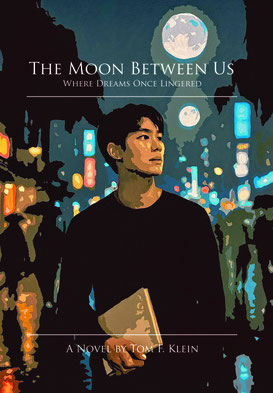
Pocketbook · 132 pages · English language
ISBN: 978-3-384-72801-2
Available at your local bookstore and online at Amazon, Thalia, Hugendubel, Osiander, Dussmann, tredition, etc.
★★★★★ “This is the kind of book that
stays with you long after you close it.”
— The Book Addict, Goodreads, March 2026
Featured on Goodreads and
the Readers Choice Book Blog
Click to read the full review on Goodreads
Some connections never fade — they wait to be remembered.
Ha-jin, a talented illustrator adrift in a creative fog, lives quietly in Seoul—until an enigmatic sketch in his notebook leads him to a café, a stranger, and the glimmer of something long lost. When Min-gyu enters his life, a stranger with a smile that feels like déjà vu and eyes that seem to know him, the line between memory and imagination begins to blur.
Set against the rhythm of rainy mornings and sleepless nights, The Moon Between Us
is a lyrical journey through art, longing, and the quiet gravity of love rediscovered.
A tender novel about the stories we carry, the ones we forget, and the ones that find
their way back to us.
A story that doesn’t begin at the beginning—but somewhere deep within the soul.
Reading sample
Prologue
·
· Where the Silence Begins ·
The coffee on Ha-jin’s desk had gone cold again.
He stared at it, then at the sketchbook lying open beneath the muted light of the desk lamp. The page was still blank. Not even a smudge
of pencil. Just a flat, accusing white, as if waiting for him to explain why he’d stopped showing up.
Outside, Seoul moved at its usual pace—horns in the distance, tires hissing along wet streets, someone yelling at a delivery driver who probably didn’t deserve it.
His apartment was perched just high enough to blur it all into noise without meaning. Somewhere down below, the city was living. He just wasn’t part of it tonight. The radiator ticked softly beside him, a low murmur of warmth that didn’t quite reach his toes. The heat was on, but the air still felt thin. Empty in a way that had nothing to do with temperature.
He pushed his chair back and stood, stretching until his spine popped. The apartment was dim except for the pool of light around his desk.
It wasn’t a big place—just a studio, technically—but it had tall windows, decent floors, and a view of the Han River if he craned his neck just right. His desk faced those windows now. He’d rearranged the furniture a few months back during one of his “something has to change” moods, but the clarity that usually followed such bursts hadn’t come.
Instead, things had gone quiet inside him.
His last published piece had been months ago. The feedback from his editor had been kind but firm: “It’s technically flawless, Ha-jin, but it doesn’t feel like you. What happened to the soul in your work?”
He hadn’t had an answer. He still didn’t.
He wandered into the small kitchen, filled a glass with water, and leaned against the counter. The silence pressed in. No music. No TV.
Just the low buzz of a streetlamp outside and the soft drip from his bathroom tap, which he kept forgetting to call someone about.
He took a sip and closed his eyes. Some people feared emptiness. He didn’t. He just… noticed it. The spaces in between things.
The pauses in conversations. The moments after you laughed too hard and had to remember how to breathe again. There had always been something strangely sacred about those
in-between places. Lately, he lived in one.
He padded back to the desk and stared again at the blank page. He could draw if he wanted. His hand still remembered the movements.
He could sketch a cathedral from memory, shade it with precision, even give it mood and atmosphere. But that wasn’t the problem.
The problem was that the drawings didn’t feel true. They didn’t ache. They didn’t need to be made. And that used to be the point.
He sank back into his chair and rubbed at his eyes. When had everything started feeling so far away? His phone buzzed once—a message from Ji-won, one of the only people who still texted regularly.
Ji-won:
Coffee soon? Or do I have to storm your place with
muffins?
He smiled faintly, thumb hovering over the keyboard, then typed:
Ha-jin:
Soon. Promise. Just... trying to get out of my head.
She replied almost instantly.
Ji-won:
Get out of your apartment, then. Go anywhere. Your brain needs oxygen.
She wasn’t wrong. But going out meant noise, and faces, and pretending to have something clever to say. He wasn’t up for it.
Instead, he closed the conversation and opened his music app, queuing a playlist titled Unsent Letters. It was mostly piano and acoustic guitar—quiet, wandering melodies that didn’t demand attention but offered something like company. He let the notes spill into the room as he leaned over the page.
Still nothing.
He glanced at the shelf by the window, where old sketchbooks were stacked like layers of his own past. He stood, pulled one from the middle, and flipped it open.
Inside: a drawing of a child crouched by a river, stones in both hands, a fish mid-leap in the background.
A page later: a profile of an old man on a park bench, eyes closed, mouth open in laughter. He remembered the exact moment he’d drawn that one—an autumn afternoon in a small café in Daegu, a chai latte growing cold beside him.
He hadn’t been thinking about art that day. Just life. Maybe that was what he’d lost. His gaze drifted to the window again. The streetlamps below cast long shadows against the sidewalk. Someone was walking a small dog in a yellow raincoat. A bus rumbled past, its windows flickering with light and quiet lives.
He wondered what it would be like to just… step out.
Go anywhere. No sketchbook. No destination. Just start walking and not stop until something moved.
He sat back down. Closed the old sketchbook. Reached for the one still waiting. And this time, instead of drawing, he wrote.
Not a story. Not a script. Just a question.
What if the next story isn’t something I make up—but something I remember?
The silence in the apartment deepened. Outside, the city was shifting toward dawn. He closed the sketchbook gently, turned off the lamp—
and let the question stay with him, quiet and unresolved.
Maybe tomorrow, something would change.
Beneath the Bangkok Skies

Pocketbook · 160 pages · English language
ISBN: 978-3-384-45145-3
Available at your local bookstore and online at Amazon, Thalia, Hugendubel, Osiander, Dussmann, tredition, etc.
★★★★★ "Wit’s patience and refusal to 'fix' Tong, but instead simply offer him a safe space, adds depth to the narrative and elevates it beyond a typical rescue story."
— Readers Choice, Goodreads, June 2026
Featured on Goodreads and
the Readers Choice Book Blog
Click to read the full review on Goodreads
Redemptive · Touching · Resilient
Beneath the glittering skyline of Bangkok, Tongyee’s life is a shadowy existence of survival. Abandoned as a child and trapped in a world of prostitution, he’s convinced that kindness is a luxury he doesn’t deserve—until a chance encounter with Suphawit, a wealthy man who offers him a lifeline.
As Wit pulls him out of the darkness, Tong’s internal battle between self-worth and shame threatens to tear them apart. Wit, haunted by the failure of a past relationship, must learn to offer support without control, while Tong fights to break free from the ghosts of his past, including the pimp who won’t let him go.
Together, they’ll confront the emotional scars that bind them, forging a bond tested by fear, guilt, and the question of whether love can truly heal.
In a journey through the chaotic streets of Bangkok to the peaceful shores of a coastal town, Beneath the Bangkok Skies is a powerful tale of second chances, emotional growth, and the promise of new beginnings.
Reading sample
Chapter 1
·
· A Lonely Night ·
The Bangkok streets pulsed with life under the dim glow of neon lights, a chaotic symphony of honking cars, revving motorbikes, and shouting vendors.
Tongyee, or Tong, as he’d learned to call himself, moved through the crowded night like a ghost. His steps were slow, careful, a bit unsteady after the beating he’d just endured. Pain radiated from his ribs, his cheek swollen and throbbing where one of the thugs had struck him with
a heavy, unkind fist.
It wasn’t the first time he’d been thrown around, and he doubted it would be the last. To them, he was nothing but a nuisance, just another nameless face in a city overflowing with lost souls. He’d learned, over the years, that his life was disposable to most of the people around him. Only the streets seemed to care, embracing him with a familiar cruelty.
As he walked, Tong glanced at the clusters of tourists laughing with sticky glasses in hand, the locals weaving between them to sell trinkets or snacks. He envied their simplicity, the ease with which they fit into this world. To them, Bangkok was exotic, thrilling. To him, it was just survival, a place that had taken everything he’d had, little by little, year by year.
His thoughts drifted to his childhood, though he didn’t like to dwell there long. The orphanage wasn’t a happy place, not for him. It had been his first prison, a place where he’d learned to fend for himself, to hide his tears, to suppress the gnawing ache of loneliness. The memories he held onto weren’t much—just scraps of kindness he’d managed to gather like treasures. An old coin a caretaker had given him once, a tiny stone with a swirl of colors he’d found in the garden. Even those were gone now, left behind in the room he’d rented until the landlord’s goons had tossed him out and stomped his things into the dust.
The night air was humid and thick, clinging to his skin like an unwelcome reminder of everything he couldn’t escape. He stuffed his hands into his pockets, feeling for any spare change, anything that might get him through until he could figure out his next move. The tips from his last few clients were long gone, spent on food and rent, though even that hadn’t been enough.
A sudden wave of dizziness made him stumble, and he caught himself against a street pole. Passersby spared him a brief glance before moving on. He’d become invisible in the city, just another shadow in the constant flow of people. It suited him fine, he told himself, better to be unnoticed than to invite trouble.
But the truth was, he felt utterly alone. There were no friends waiting for him, no family to call, no place he could go to find comfort or peace. His life was a constant cycle of scrambling for survival, of finding clients who would pay him enough to make it through one more day. It was work that left him feeling hollow, stripped of any pride or dignity. Yet he didn’t have the luxury to be picky. Pride didn’t fill empty stomachs.
He slipped into an alleyway, away from the glaring lights, and leaned his head against the cool bricks of the building. His cheek stung as he pressed it against the rough surface, the pain reminding him he was still here, still breathing. He’d grown used to this—the ache, the bruises, the emptiness. Sometimes, it was the only thing that kept him grounded, a reminder that he hadn’t vanished entirely.
For a moment, he let himself close his eyes, allowing the noise of the street to fade into a low hum. He could almost imagine a different life, one where he wasn’t always on edge, where he had somewhere safe to go, someone who might care if he didn’t show up. It was a foolish fantasy, and he knew it. But sometimes, in moments like these, when the pain felt too heavy to bear, he allowed himself the luxury of hope, even if just for a fleeting second.
His thoughts were interrupted by the sound of footsteps. He tensed, instinctively shrinking back against the wall, his body rigid with anticipation. The alley wasn’t exactly a safe place to linger, and he didn’t need any more trouble tonight. A group of men passed by, laughing loudly, their voices rough and thick with alcohol. One of them glanced his way, sneering, but they moved on, leaving him alone once more.
Tong let out a shaky breath, a bitter smile tugging at his lips. This was his life—a series of close calls and narrow escapes, constantly dodging danger, always one step away from disaster. He pushed himself off the wall, wincing as pain flared up in his side. The bruises would take days to fade, though he doubted he’d be able to rest long enough to let them heal. There was no time for recovery, not when every day demanded more than he had to give.
He started walking again, his footsteps echoing softly against the cracked pavement. He didn’t know where he was going; he never did. The streets had become his home, a maze of alleyways and backstreets where he could disappear, at least for a little while. He wandered aimlessly, letting the city guide him, each corner revealing another stretch of neon-lit concrete, another pocket of darkness where he could hide.
As he walked, the sounds of the city began to fade,
replaced by the whisper of memories he couldn’t escape. He thought of the people who’d claimed they would help him, the ones who’d promised him safety only to exploit him, to strip away what little he had left. He’d trusted them once, believed their lies because he hadn’t known any better. But he knew better now.
Now, he trusted no one. People didn’t help you out of kindness—they did it for themselves, for what they could take from you. He’d learned that the hard way, each betrayal carving another scar into his soul, another reminder that he was on his own. He’d stopped hoping for rescue, stopped dreaming of a way out. Survival was all he had left, and even that was slipping through his fingers.
The weight of it all pressed down on him, heavy and suffocating, a burden he could no longer bear. He didn’t know how much longer he could keep going like this, didn’t know if he even wanted to. His life felt like a nightmare he couldn’t wake up from, a never-ending cycle of pain and despair. And yet, he kept walking, each step a testament to his stubborn will to survive, to endure, if only for one more night.
But deep down, he couldn’t help but wonder—was there really anything left worth surviving for?
Between Dimensions · Silken Bonds and a Serpent's Heart

Two souls, Two Worlds: A love forged by destiny and bound by courage.
In the lush landscapes of Udon Thani Province, where ancient myths and modern life intertwine, Sasin, a devoted elder son from a renowned silk-weaving family, faces
a desperate battle to save his younger brother.
His prayers at the sacred Kham Chanot Forest awaken Pharith, a mysterious Naga, who steps into the human world to help.
As their lives and worlds collide, a bond of love and trust forms, transcending realms.
But with danger threatening their union and the fragile balance between dimensions,
they must summon courage and unwavering devotion to protect what truly matters.
A moving story of bravery, devotion, and fate.
Between Dimensions, explores Thailand's captivating beliefs in Nagas and their role
as guardians of the sacred, weaving a heartfelt tale that bridges ancient myths with
the modern world.
Reading sample
Chapter 1
·
· A Morning at the Looms ·
The morning sun streamed through the large windows of the silk workshop, casting golden light on the rows of looms that filled the space. The rhythmic clacking of wooden frames echoed in the air, blending with the occasional murmur of artisans deep in concentration.
Threads of vibrant silk stretched across the looms—crimson as sunset, emerald like the forests beyond thevillage, and royal blue as the endless sky. The scent of fresh dye mixed with the warm, aged wood of the looms, grounding the space in tradition and craft.
Sasin stood near the entrance, arms crossed, his sharp eyes scanning the workshop. His presence carried an effortless authority—calm, measured, yet undeniably firm. Every detail had to be perfect. Their family’s Pha Khit silk wasn’t just fabric; it was heritage, woven through generations and revered far beyond Udon Thani.
“Uncle Somchai, the tension on that warp thread needs adjusting,” Sasin noted, pointing toward a loom where the delicate pattern wavered slightly.
Somchai, an older artisan with hands weathered from decades of weaving, nodded with a small smile.
“You’ve got your grandfather’s eye, young man,” he remarked as he adjusted the frame. “Nothing escapes you.”
Sasin grinned, the warmth of the compliment settling deep in his chest.
“Well, someone has to keep you on your toes,” he teased before moving further into the workshop.
The air hummed with activity, the workers—mostly women with nimble fingers and decades of expertise—methodically guiding threads into intricate patterns. Sunlight kissed the glistening silk, making it seem almost alive. Sasin took a slow breath, allowing himself a moment of quiet pride.
At the far corner, Malee, his mother, worked at the dyeing station, stirring a vat of pigment with effortless grace. Strands of silk hung nearby, dripping with deep, jewel-toned color, drying under the soft morning sun.
“Morning, Ma,” Sasin greeted, leaning against the wooden frame of the doorway.
Malee glanced up, her face lighting with a warm smile.
“Good morning, my son. Have you eaten yet?” she asked, brushing a stray strand of hair from her forehead—leaving a streak of crimson dye across her cheek.
“Not yet. I’ll grab something later,” he replied, watching as she tested the color by lifting a strand of silk. The deep red shimmered in the light. “That looks incredible.”
“It should. It’s for the royal commission,” she said with quiet pride. “But I think it still needs a touch of saffron to deepen the shade.”
Sasin stepped closer, noticing the streak of crimson on her cheek. He pulled a handkerchief from his pocket.
“Ma, hold still,” he murmured, gently wiping it away. “There, much better.”
Malee chuckled, her eyes crinkling with affection.
“Always so particular. You’ll make someone very happy one day.”
Before he could respond, Anan, his father, walked in, balancing a clipboard in one hand and a phone pressed to his ear. His voice was calm yet firm as he finalized shipping logistics. He ended the call with a sigh and turned to Sasin.
“Ah, just the person I need,” Anan said, handing him the clipboard. “The export order for Japan needs one last check. Can you review it before it’s sent?”
“On it,” Sasin replied, scanning the details.“
Everything looks fine so far, but I’ll double-check.”
Anan nodded, already moving on to the next task.
That was how things had always been in their family—efficient, interconnected, and built on trust.
Later that morning, Sasin returned home for a short break. Their family house was a blend of traditional Thai architecture and modern functionality.
The wooden stilted structure, with intricately carved eaves, stood amid lush greenery, overlooking rice paddies that swayed gently in the breeze. The air carried the fresh scent of lemongrass and jasmine, mingling with the earthy aroma of the countryside.
On the veranda, Chalerm, Sasin’s grandfather, sat in his usual spot—a carved wooden recliner, his
wide-brimmed hat shielding his eyes. Despite the apparent laziness of his posture, nothing escaped his notice.
“Come, sit with me,” Chalerm called, patting the seat beside him. “You’ve been running all morning. Take a breath.”
Sasin sank into the chair, stretching his legs.
“It’s been busy, Grandpa. But everything’s under control.”
Chalerm chuckled.
“It always is with you. You remind me of your father when he was your age—always thinking three steps ahead.” He exhaled, his gaze drifting toward the fields. “But don’t forget to live in the moment too, Sasin. Life is like weaving silk. Pull too hard, and the threads snap. Handle them too gently, and they slip through your
fingers.”
Sasin absorbed the words, nodding. Before he could respond, the screen door creaked, and Nipon appeared, balancing two plates of mango slices.
“Am I interrupting some deep, ancient wisdom, or can I join?” Nipon asked with a teasing grin.
“You’re always interrupting,” Sasin shot back, but he scooted over to make room.
Nipon plopped down beside them, handing a plate to Chalerm. The three of them sat in comfortable silence, enjoying the sweet, ripe mangoes. Nipon, ever the troublemaker, stole a slice from Sasin’s plate.
Sasin scowled.
“You’re unbelievable.”
“And you didn’t even cut these yourself, did you?” Chalerm added with mock disappointment.
“Nope,” Nipon grinned. “That’s what we have Ma for.”
Despite himself, Sasin laughed.
That afternoon, Sasin met his best friend, Pran, at a cozy café tucked away in a quiet part of town. The mismatched chairs, hanging potted plants, and scent of freshly brewed coffee made it one of their favorite spots—a refuge from responsibility.
Pran was already waiting, tapping his fingers against his cup.
“You’re late.”
“You’re just early,” Sasin countered, sliding into the chair across from him. “You look like you’re on your way to an interview.”
Pran smirked, smoothing his crisp white shirt.
“Some of us like to look good for no reason. Unlike you, who dresses like you’re about to fix a loom.”
Sasin scoffed.
“Comfort over style.”
Their conversation shifted between playful banter and deeper topics, Pran urging Sasin to loosen up and enjoy life beyond work.
“You work too hard,” Pran said, his tone suddenly serious. “You’re always planning, always thinking. But what about just… being?”
Sasin stirred his coffee, thoughtful.
“You sound like my grandfather.”
“Then the old man is wise,” Pran replied with a grin. “Don’t be afraid to let go, Sasin. Not everything has to be perfectly woven.”
By evening, the mood at home had shifted.
Nipon, usually full of energy, had barely touched his food. A faint flush colored his cheeks, and his shoulders sagged.
“I think I’ll lie down,” he murmured.
Malee pressed her hand to his forehead.
“You’re warm,” she said, frowning. “I’ll make you some herbal tea.”
Sasin lingered in the doorway, watching as Nipon curled under his blankets. A nagging unease settled in his chest. It was just fatigue,
wasn’t it?
Later that night, long after the house had fallen silent, Sasin stood in the workshop, running his fingers over the ancestral loom. Its dark wood was cool under his touch, solid and unchanged.
He let out a slow breath, whispering a silent prayer. For his brother. For his family. For the strength to face whatever came next.
·
Bloodlines of Chiang Mai · Love and Sacrifice in the Shadows of Eternity

Pocketbook · 137 pages · English language
ISBN: 978-3-384-38288-7
Available at your local bookstore and online at Amazon, Thalia, Hugendubel, Osiander, Dussmann, tredition, etc.
★★★★★ “This book is not about big twists
or shocking moments. It is about feelings, about art, about love that lingers even when
we think it is gone… the kind of story that stays with you long after you close it.”
Featured on Goodreads and
the Readers Choice Book Blog, March 2026
Click to read the full review on Goodreads
Click to read the full review on
The Readers Choice book blog
Haunting · Intense · Bittersweet
Centuries-old vampire Niran has lived a life of solitude and secrecy in the shadows
of Chiang Mai, content in his eternal existence until he meets Dew, a human whose love awakens a forgotten humanity within him.
But as Niran’s feelings for Dew grow stronger, he faces an impossible choice: hold on to his
immortality or risk everything to protect the man he loves.
When Niran’s brother, Channarong, threatens to shatter their fragile happiness, Niran is forced to confront his darkest fears and make the ultimate sacrifice. As ancient bloodlines are tested and forbidden boundaries are crossed, Niran and Dew must navigate a world filled with danger, deception, and desire.
Bloodlines of Chiang Mai is a spellbinding tale of love and sacrifice, where the shadows
of immortality collide with the light of human devotion.
Reading sample
Chapter 1
·
· Midnight Market ·
The city of Chiang Mai breathed with a life of its own under the soft illumination of twilight. As the sun dipped below the horizon, the night market began to awaken, stretching along the narrow streets with stalls brimming with exotic fruits, woven silks, and the vibrant hues of handmade crafts.
The air grew thick with the mingling aromas of grilled skewers, fresh herbs, and sweet mango sticky rice. Lanterns swayed
gently overhead, their light reflecting off the smooth stone walkways, while incense smoke drifted lazily from a nearby temple, creating a unique perfume—a blend of the sacred and the everyday. The chatter of vendors calling out their wares mingled with the distant hum of motorcycles and the laughter of tourists haggling over prices.
Amidst this symphony of sounds and scents, Dew moved like a shadow through the crowded marketplace.
A young photographer with a keen eye, he was captivated by the dance of light and shadow, how they played across ancient walls and illuminated the hidden stories of the people who tread these paths. His camera swung from his neck, ready to capture fleeting
moments—the curious gaze of a child tasting his first spoonful of coconut ice cream, the nimble fingers of an elderly woman meticulously arranging her handmade trinkets, a street performer spinning flaming batons in a blur of fire.
Dew's eyes darted from stall to stall, each a potential canvas for his next photograph. As he navigated the bustling market, his gaze caught on an unusual figure. A man stood apart from the throngs of tourists and locals, his posture exuding a quiet, almost regal presence.
He was dressed simply yet elegantly in a dark, tailored jacket over a crisp white shirt. His long, black hair was tied back, and there was an air of timelessness about him, as if he belonged to another era. The man seemed strangely out of place, his sharp features and distant expression setting him apart from the lively chaos around him.
Dew's camera lens lingered on the stranger, intrigued by the way he stood by a small herbal medicine stall, his hands lightly tracing the edges of an old, worn book. The stall owner, a wrinkled man with a knowing smile, appeared to recognize the stranger, offering a subtle nod
of respect. Dew discreetly snapped a photo, the click of his camera lost in the noise of the market. As he lowered his camera, the man's gaze lifted, his eyes meeting Dew’s. For a moment, time seemed to pause. There was a flicker of something—curiosity, perhaps—but Dew quickly turned away, pretending to be absorbed in his surroundings.
Later that evening, Dew found himself at a small café by the river, a cup of iced tea sweating in his hand. He flipped through the shots he had taken that day, the images flickering across his camera screen like moments suspended in time. When he reached the image of the man, he paused, zooming in to examine the fine details.
The sharpness of the man's gaze, the subtle elegance in his posture, and the almost melancholic expression on his face made Dew feel as if he had captured something truly unique. Something otherworldly.
He stared at the photograph for a long time, his thoughts swirling. There was something about this man that drew him in, something he couldn't quite understand. Dew decided he would print the photo once he got back home. Holding the image on the screen, he murmured,
“Who are you?” The question hung in the air, unanswered.
Days passed, yet the stranger’s face lingered in Dew's mind, haunting him like a half-remembered dream.
On a humid afternoon, his feet carried him back through the winding alleys of the old city, past the familiar scents of incense and frangipani trees above, a constant reminder of the city’s deep-rooted history.
As he approached a small, serene temple hidden behind a cluster of banyan trees, he saw him again. The man stood alone in the temple courtyard, his back to Dew, gazing at the ancient carvings on the weathered walls.
Dew’s heart raced as he approached, his mind racing with the perfect opening line.
“Excuse me,” he began, his voice light, unassuming, “I think I accidentally took a photo of you the other day at the market. I… found it quite captivating.” He extended the print, displaying the image, hoping he didn’t seem too forward.
The man’s eyes narrowed slightly, a flicker of caution flashing across his face. He hesitated, glancing at the photo displayed. His fingers hovered over the print, but he didn’t reach out. His gaze returned to Dew, studying him carefully.
“You find this captivating?” he asked softly, his voice low and measured.
“Yes,” Dew replied, smiling, “There’s something…
different… about you. I couldn’t quite put my finger on it. I’m a photographer, you see, always looking for the unusual, the unseen… And you seemed like someone who has stories hidden away.”
The man's gaze shifted back to Dew, his expression unreadable, though a hint of amusement flickered in his dark eyes.
“Stories, you say?” he murmured. “Maybe I have a few… but I doubt they would interest a modern man like yourself.”
Dew chuckled softly, easing into the rhythm of the conversation.
“You’d be surprised at what interests me. This city has so many layers, so much history… and I have a feeling you know quite a bit about it.”
The man nodded slowly, his expression thoughtful.
“Chiang Mai has a way of revealing itself only to those who truly seek its heart. But it’s not always the soul that one finds… sometimes, it’s the shadows.”
Dew felt a shiver run down his spine at the man's words. There was something both inviting and cautionary in his tone. He laughed, trying to shake off the feeling.
“I’d like to find both… if I can... I think.”
They fell into a deeper conversation. Dew spoke of his love for capturing moments, the fleeting beauty of light and shadow, and his fascination with the hidden corners of the city.
The man, whose name Dew soon learned was Niran, listened more than he spoke. When he did speak, his words carried a weight, a depth that suggested he had lived through more than he let on.
“I’ve been trying to capture the soul of Chiang Mai,” Dew said with enthusiasm, “not just the temples and the tourists, but the real, unfiltered essence of this place. The people, the stories…”
Niran nodded, his expression contemplative.
“Chiang Mai holds many secrets for those who are looking,” he said softly. “But be cautious, … sometimes, it’s the things we’re looking for that find us first.”
Dew felt another shiver.
The conversation flowed like a river, winding and unhurried. He found himself drawn to Niran’s quiet intensity, the way he seemed to carry centuries within him. Niran, in turn, found himself intrigued by Dew’s passion, his youthful curiosity, and his genuine love for the city and its secrets.
A soft bell chimed from the temple, signaling the evening prayer. Niran bowed slightly, a gesture of respect, before
turning back to Dew.
“Perhaps we will meet again,” he said quietly. “The city has a way of bringing people together… when it is meant to be.”
Dew watched as Niran disappeared into the shadows of the temple, a mix of curiosity and excitement bubbling within him. He felt as if he had just brushed against something big, something beyond his understanding. The photographer in him sensed a story waiting to be
uncovered, while the man in him wondered what mysteries lay beneath Niran’s enigmatic surface.
The sun dipped lower in the sky, painting the horizon in shades of amber and crimson. The streetlights flickered on, one by one, casting long shadows that stretched across the streets. Dew felt the pulse of the city around him, alive and whispering secrets, as he contemplated his next move. The distant sound of a traditional Thai melody drifted through the air, blending with the hum of the city.
He knew this was just the beginning.
·
Spirit of My Love · A Ghostly Romance Across Worlds

Pocketbook · 168 pages · English language
ISBN: 978-3-384-36284-1
Available at your local bookstore and online at Amazon, Thalia, Hugendubel, Dussmann, Osiander, tredition, etc.
★★★★★ “A hauntingly beautiful connection, soft, genuine, and deeply felt.” — theviewroom02, Goodreads, April 2026
Featured on Goodreads and
thereviwroom02 Book Blog
Emotional · Entrancing · Ethereal
In bustling Bangkok, Samart, a young advertising writer recovering from heartbreak
and seeking a fresh start, moves into a charming yet haunted apartment.
Little does he know, it's already home to Ananda, a lively ghost with unresolved matters. As they navigate their unusual coexistence, Samart and Ananda's bond grows through laughter, collaboration, and unexpected events, revealing a love that transcends life and death.
"Spirit of My Love · A Ghostly Romance Across Worlds" tells their journey of closure, redemption, and eternal connection.
Reading sample
Chapter 1
·
· Ananda ·
Bangkok 1964
The city was alive. It hummed with a rhythm that was both chaotic and mesmerizing, a symphony of sounds and smells that blended the ancient with the
modern. On every corner, the scent of sizzling street food mingled with the fragrant plumeria flowers that hung from trees lining the narrow streets. Samlors, the three-wheeled rikshaw
bikes, zipped through the city’s arteries, dodging pedestrians and cyclists, their drivers calling out in rapid Thai to the hordes of people moving about in the sultry evening air. The golden
spires of temples glistened in the fading sunlight, while neon signs flickered to life, casting a garish glow over the bustling markets that seemed to sell everything imaginable.
The newspaper office where Ananda worked was nestled in one of the quieter, more unassuming parts of the city, far from the glamorous shopping districts and towering new buildings. The office was located in an aging colonial-era building, its brick walls covered in a thin layer of grime that spoke of decades of relentless heat and monsoon rains. The once-grand façade had lost much of its luster, with cracked windows and a rusting sign above the entrance that simply read ‘Bangkok Daily.’
Inside, the newsroom was a hive of activity. The scent of ink and freshly printed paper filled the air, mingling with the faint aroma of strong, bitter coffee that seemed to be perpetually brewing in the corner. The wooden floorboards creaked underfoot as reporters moved about, their conversations a steady murmur of voices discussing everything from local politics to the latest scandal in the entertainment industry.
The clatter of typewriters was nearly constant, a rhythmic backdrop to the low hum of electric fans straining to combat the stifling heat.
Desks were packed close together, each one piled high with papers, notebooks, and copies of the day's edition, some barely held together by rusty paperclips. The walls were lined with filing cabinets overflowing with old articles and photographs, yellowed with age. On one wall, a large map of Thailand was pinned, dotted with red and blue pushpins marking the locations of ongoing stories.
Ananda’s desk was no different, cluttered with the detritus of a young journalist’s life: half-empty cups of coffee, stacks of notes written in his meticulous script, and a typewriter that had seen better days. The keys were worn smooth, the letters faint from years of use, but it still worked, clicking away as Ananda typed out the latest draft of an article exploring the revival of traditional arts in the city's cultural districts.
“Ananda!” a voice called out, cutting through the noise of the newsroom. It was Thida, one of the senior reporters, his hands full of rolled-up newspapers. “Can you grab the latest reports from the arts desk? The editor wants them on his desk ten minutes ago!”
Ananda nodded, quickly placing his draft aside before getting up.
“On it,” he replied, weaving through the crowded room. As he passed by, he overheard snippets of conversations—debates over headlines, discussions about the city’s latest political drama, and one young reporter frantically flipping through his Rolodex, searching for a contact number.
“Did you hear about the new shop opening in Thonburi?” one of his colleagues, Paiboon, asked as Ananda approached the arts desk. Paiboon was new to the office but had quickly gained a reputation for his curiosity and sharp eye for detail. “They’re supposedly showcasing lost Siamese crafts.”
Ananda smiled, nodding in recognition.
“I’ve heard about it. In fact, that’s exactly what I’m writing about. Interesting, isn’t it?”
“Definitely,” Paiboon replied, his eyes lighting up. “There’s something about reconnecting with our roots that feels really important
these days.”
Just as Ananda gathered the reports, a voice boomed from the editor-in-chief's office.
“Ananda, where’s that draft?” The editor-in-chief, Khun Thanachai, was a stern man with a permanent frown etched into his face. He paced the room with the air of a man carrying the weight of the world on his shoulders, his gruff voice cutting through the noise as he demanded rewrites, approved headlines, and occasionally barked out a rare compliment when something particularly impressed him.
“Almost done, sir!” Ananda called back, hurrying to return to his desk. As he passed by Thida again, she gave him a sympathetic smile.
“Don’t worry,” she said with a wink, “he’s just in one of his moods today. You know how he gets.”
Ananda chuckled, settling back into his chair and glancing at the clock. He still had some time before the deadline.
The sharp scent of newsprint hung heavy in the room, a constant reminder of the ticking clock and the relentless pressure to get the news
out on time.
The editor-in-chief’s voice carried over the hum of the newsroom again, but this time, it was softer, almost approving.
“Good work on that last piece about the riverside communities, Ananda. You’ve got a good eye for these human-interest stories.”
“Thank you, sir,” Ananda replied, a surge of pride warming him. Praise was rare from Mr. Thanachai, and he knew better than to take
it lightly.
Outside the windows, the city buzzed with life, but inside the office, the focus was singular: the news.
Every story mattered, every detail was scrutinized, and every deadline loomed large. Ananda thrived in this environment, the constant pressure driving him to write better, to dig deeper, to find the truth in a city that was as full of secrets as it was of life.
As the day drew to a close, the frenetic energy of the newsroom began to taper off. The sun dipped lower in the sky, casting long shadows across the desks, and the once-vibrant chatter quieted to a low hum. Ananda typed the final few sentences of his article, the words flowing from his fingers with the ease of familiarity. With a satisfied sigh, he pulled the paper from the typewriter, giving it a quick read before placing it in the editor’s inbox.
He stretched his arms above his head, feeling the tension ease from his muscles. The room was slowly emptying as his colleagues began
to leave, their weary faces softened by the promise of a night away from the demands of the news cycle. Ananda gathered his things, slipping his notebook into a worn leather satchel, an heirloom from his father.
As he prepared to leave, Paiboon caught up with him near the door.
“You heading out? There’s a street food stall nearby that’s famous for its khao man gai. Care to join?”
Ananda smiled, considering the offer.
“Thank you, but I think I’d rather head home. I want to work a bit more on my novel. How about another day?”
The air outside the building was thick with the scents of the evening: grilled meats from the street vendors, the sweet perfume of flowers, and the ever-present smell of the river that wound its way through the city.
Ananda stepped out into the alley, the din of the newsroom fading behind him as he was enveloped by the city’s embrace. The sky was
a deepening shade of purple, and the neon lights that lined the streets cast a colorful glow on the pavement.
He walked slowly, savoring the evening breeze as it brushed against his face. The city around him was alive with the sounds of night markets, the clinking of glasses in bars, and the distant hum of traffic. Ananda made his way through the familiar streets, each step taking him closer to the modest neighborhood he called home.
He stood at the edge of a crowded alleyway, taking in the lively scene. The neighborhood he called home was a modest one, a far cry from the more affluent districts of the city. Here, the streets were narrower, the buildings older, and the people a bit more weary. Yet, it had a charm of its own, a warmth that Ananda had come to appreciate over the years. It was a place where life was lived with intensity, where every day was a struggle, but also a victory of sorts.
The building where Ananda lived was nestled deep within this neighborhood, its faded façade blending in with the surrounding structures. Once white, the walls had long since turned a weary gray, stained by time and the relentless Bangkok humidity. The wooden windows creaked as they opened, their frames warped by countless rainy seasons. The building had seen better days, but it was still standing, just as Ananda was.
He ascended the worn stone steps to the third floor, his footsteps echoing in the narrow stairwell. The hallways were dimly lit, the lightbulbs flickering intermittently, casting long shadows on the cracked plaster walls. The smell of fried garlic and fish sauce wafted through the air, mingling with the mustiness of the old building.
Ananda’s apartment was in the middle of the corridor, its door marked by a faded number “7” that hung loosely from a single nail.
Inside, the room was small and sparsely furnished, but it was Ananda’s haven. The wallpaper, once adorned with delicate floral patterns, was now peeling, revealing the discolored plaster beneath. A rickety wooden desk sat by the single window, its surface cluttered with stacks of papers, old books, and a well-worn typewriter. A narrow bed was pushed against the opposite wall, the thin mattress sagging in the middle, covered by a threadbare blanket. The room was humble, yet it exuded a quiet charm, much like its occupant.
Ananda was a strikingly handsome young man, his sharp features and expressive eyes holding a depth that belied his
24 years. His jet-black hair was slightly tousled, falling over his forehead as he sat at his desk, leaned over the typewriter and began writing, his fingers dancing across the keys with a passion that seemed to consume him. His white shirt, slightly worn at the edges, clung to his lean frame, and his dark trousers were frayed at the cuffs, evidence of his frugal lifestyle, yet there was a strange elegance to him, a refinement that seemed out of place in such modest surroundings, yet it was this very contrast that defined him.
The room was silent, save for the rhythmic clacking of the typewriter keys as Ananda poured his soul into the words on the page. He had been working on his novel for months now, stealing moments between his job at the newspaper and the
demands of daily life. The story was his escape, a world of his own creation where he could lose himself in the lives of his characters, each of whom carried a piece of him within them. It was a labor of love, driven by the memory of his grandmother, the woman who had raised him after his parents had abandoned him as a baby.
Ananda paused, his fingers hovering above the keys as he gazed out of the window.
The view was nothing special, just a glimpse of the narrow alley below and the rows of dilapidated buildings beyond. But to Ananda, it was a window into the world he was trying to escape through his writing.
He sighed, his mind wandering back to the days of his childhood, spent in this very apartment with his grandmother.
She had been a kind and loving woman, doing her best to provide for him with the little money his parents occasionally sent. It was she who had instilled in him a love for learning and literature, saving every bit she could for his education. Her death two years ago had left a void in his life, but it had also strengthened his resolve to fulfill the dreams she had for him.
Now, as he sat in the quiet solitude of his apartment, Ananda felt the weight of his loneliness more than ever.
His job at the newspaper was far from fulfilling, the meager salary barely covering his rent and basic necessities. Yet, he remained undeterred, pouring his energy into his novel, hoping that one day it would be published and bring him the recognition he dreamed of. He could almost see it: his name on the cover of a book, his words touching the hearts of readers, his life transformed by the power of his story.
The room was cluttered with books and manuscripts, the scent of old paper filling the air. It was a smell that Ananda had come to love, a reminder of the countless hours
he had spent lost in the world of words....
Neon Love · A Bangkok Tale of Fate and Desire

Romantic · Passionate · Captivating
Natthapon, the suave heir to a chain of luxury car shops, and Awin, a talented
self-taught artist from a modest background, find themselves entangled in a web
of fate and desire.
Despite societal pressures and past flames, they stand united, their bond strengthened amidst challenges.
Set against the neon-lit backdrop of Bangkok's bustling cityscape, their story unfolds -
a vibrant tale of passion, perseverance, and the triumph of love over adversity.
Join them on their journey, where their love story defies all limits, showcasing that genuine love transcends every boundary.
Reading sample
Chapter 1
Under the Neon Glow:
A Chance Encounter in the rain
The evening draped over Natthapon like a heavy cloak, the darkness punctuated only by the intermittent flashes of lightning that streaked across the sky. Dawn bid farewell, its last rays of light fading into the horizon leaving Natthapon to navigate through a rainstorm that seemed
to have a personal vendetta against him.
The street, a narrow artery winding through a desolate neighborhood in Bangkok, seemed to stretch endlessly into the obscurity ahead, dimly lit by the neon glow of the streetlights. His car, a faithful companion on countless journeys through the night, suddenly betrayed him
as it stuttered and wheezed to a halt in the middle of the dimly lit street.
Natthapon cursed softly under his breath and hit the steering wheel, frustration mounting as raindrops pelted against the windshield
with relentless fury. He fumbled for his mobile phone, only to be met with the bitter realization that its battery had decided to take an early retirement. „Seriously?” he yelled at the heavens, as if the universe had orchestrated this just to mess with him.
Stepping out into the downpour, Natthapon's heart sank further as he popped open the hood of his car,
revealing a maze of unfamiliar machinery. His mechanical knowledge was limited at best, and he found himself staring helplessly at the engine, willing it to reveal its secrets.
A sudden interruption shattered the silence as a scooter pulled up beside him, its headlights cutting through the darkness like a beacon of hope, ...or was it just another twist in this twisted night?
Natthapon turned to see a figure clad in a raincoat and helmet, barely discernible through the curtain of rain. ‘Great,’ he thought, ‘this could either be my savior or the villain in a B-grade horror flick.’
The driver's voice, muffled by the sound of the pouring rain, cut through the night air. “Hi. Problems? Do you need help?” the driver asked. Relief Natthapon realized he might not end up as a headline in tomorrow's news.
The guy with the scooter removed his helmet, revealing himself as Awin, a friendly stranger in this unfamiliar landscape. Despite his initial wariness, Natthapon felt a sense of trust in the guy’s demeanor. His handsome face and the way he looked him in the eyes were reassuring
in a way.
“Well, yeah, I guess I could need some help. My car just broke down. It suddenly stuttered and then the engine stopped, and I don’t have
a clue why,” Natthapon answered, with a desperate look in his eyes, shrugging his shoulders.
“I see,” Awin said. “Unfortunately, I don’t have much idea about cars either, but my father owns a nearby car repair shop. I can get him have your car towed to the shop, and have it checked if you want.”
Natthapon hesitated, torn between his apprehension of accepting help from a stranger and the realization that he had no other viable options with his mobile phone dead and the night growing darker in this uninviting area. “Well, um, ok, if this isn’t too much to ask for, I would appreciate your help,” Natthapon agreed reluctantly to Awin‘s offer of assistance.
“Ok, just wait here for a few minutes. I’ll get my father with his tow truck,” the answer came.
As he sped off on his scooter to fetch his father, Natthapon waited anxiously, his mind racing with thoughts of the unknown. Minutes felt like hours until the guy returned, accompanied by his father Anuphap and a tow truck.
The father was a middle-aged man, a sporty fellow with a friendly face and positive aura. His hair was cropped short, and he was in his work attire and a dark green rain jacket. “Sawasdee young man,” Awin’s father greeted. “What seems to be the problem here?”
“Sawasdee khrab sir. I have no idea. Everything seemed ok, and suddenly the car started to stutter and came to a halt,” Natthapon said, shrugging his shoulders again.
“Hm,” the father grunted. “Strange for an expensive car like this. I am sure it isn’t anything serious, but let’s take that baby to the shop and check what’s the matter. Can’t do this here in the pouring rain.”
“OK, if you think that is best, then yes, please let’s do that,” Natthapon answered, sending off a secret prayer that he would not be robbed, kidnapped or worse.
The father moved to fix a chain to the car and slowly and carefully, not to get any scratches on the shiny car paint, hoisted it on the truck.
Natthapon watched with a mixture of gratitude and apprehension. Once the car was securely fixed in the back of the truck, the three men got into the vehicle and drove away into the night.
The car repair shop, illuminated by fluorescent lights, offered a stark contrast to the darkness outside. Natthapon followed Awin and his father as they took the car into the shop, where the faint smell of grease and oil permeated the air.
There was a hydraulic ramp with an old car on it without wheels. Another car stood above a workshop pit. Tires stacked in one corner and a clutter of tools and machinery everywhere.
“OK,” the father said to the car, “let’s see what hiccup did make you go on strike,” opening the hood of the black Mercedes coupé. “You guys go inside and get some dry clothes. You’re drenched and will catch a cold if you don’t change.”
He waved the guys off, disappearing under the car’s hood. As Awin 's father set to work, Natthapon felt a sense of awe at the unexpected kindness shown to him by strangers in the dead of night. Despite the initial uncertainty, Natthapon realized that sometimes, the darkest nights lead to the brightest encounters.
Romance Under the Banyan Tree
From City Lights to Sanctuary Nights

Charming · Gripping · Witty
In the bustling city of Bangkok, Nongchat seemed to have it all - youth, charm,
and a privileged upbringing. But one drunken night, a lost bet lands him at
an elephant sanctuary in Krabi.
There, he meets Thanasak, a rugged veterinarian, and sparks fly amidst hilarious mishaps. What began as clashes of city versus country soon blossomed into a deep bond, filled with laughter, love, and a shared passion for the gentle giants.
Join them on a heartwarming journey of discovery, where unexpected twists lead to a life filled with joy, understanding, and the true meaning of love.
Reading sample
Chapter 1
A Bet and a Belle:
A Rooftop Bar and a Lost Challenge
Nongchat couldn’t quite remember what had possessed him to join the rooftop bar escapade that fateful night in Bangkok.
Maybe it was the stress of exams, or maybe it was the sheer allure of the city lights stretching out beneath him like a be-dazzled blanket.
Whatever it was, it led him, a usually composed and ever-so-slightly privileged and handsome medical student, into the clutches of a bet he would soon regret.
The rooftop bar was a sight to behold. Strings of fairy lights crisscrossed above, casting a warm, inviting glow over the crowd.
The hum of conversation mixed with the steady beat of the music - a blend of modern pop hits and old-school Thai classics. The air was thick with the scent of grilled skewers and exotic cocktails, the chatter punctuated by bursts of laughter and the occasional cheer as someone knocked back a particularly potent shot.
From his vantage point, Nongchat could see the Chao Phraya River below, its dark waters dotted with colorful lit ships that looked like floating lanterns drifting lazily downstream.
The city's skyline glittered, high-rises and temples alike casting reflections that danced on the water's surface.
Nongchat was in the company of his closest friends, though in his current state, the line between friend and instigator was blurry.
Earlier that evening, they had dinner together at an exclusive Japanese restaurant, indulging in sushi and sake before deciding to hit the rooftop bar for drinks.
Pao, his obnoxiously charming classmate, was theringleader. With his ever-present smirk and mischievous glint in his eye, Pao was the kind of guy who could talk you into just about anything.
"That sushi was killer, but we need some real fun now," Pao had said, flashing a grin. He was flanked by Mint and Beam, equally buzzed and equally complicit.
Mint, with her pixie-cut hair and infectious laugh, was the loudest cheerleader for any of Pao's harebrained schemes.
"C’mon, let’s hit the rooftop bar. The night’s just getting started! " she had exclaimed, her eyes sparkling with excitement.
Beam, quieter but no less daring, was the steady anchor of the group, always ready with a sarcastic quip or a steadying hand when things went too far.
"Yeah, let’s go see what kind of trouble we can find up there," he had added with a chuckle. And so, they had found themselves at the rooftop bar, the night air filled with the promise of
adventure and a hint of mischief.
As they settled into their seats, the city lights sparkling around them, the booze started flowing like there was no tomorrow. Nongchat found himself getting sucked into the fun, each drink making everything a bit more hazy. Pao was on a mission, ordering round after round with
a smirk that said, "Why stop now?" And hey, who were they to argue? So they kept 'em coming, one after another, laughing and joking like there was no end in sight.
"C’mon, Chat! Don’t be such a wuss! " Pao slurred, waving a shot of something potent in Nongchat’s face. "Bet you don’t dare ask Peach out for dinner! "
Nongchat blinked slowly, the alcohol blurring his vision but not enough to obscure Peach, the undisputed queen of their faculty.
She stood by the bar, laughing with her friends, her perfect hair shining under the neon lights like some kind of shampoo commercial.
In a sober state, Nongchat knew better than to approach her. But tonight, logic had left the building.
"You’re insane, " Mint giggled, nudging Beam. "This is going to be epic. "
"Do it, Nongchat! " Beam urged, his grin wide. "What’s the worst that can happen? "
"I’ll do it, " Nongchat declared, puffing out his chest with the confidence only a few drinks can bestow. "Right, what’s the worst that can happen? "
"Attaboy!" Pao patted him on the shoulder, making him almost stumble off the rooftop, at least that's how it felt to Nongchat. He steadied himself, took a deep breath,
and swaggered over to Peach.
"Hey, Peach! " he said, his voice cracking halfway through. Smooth, Nongchat. Real smooth.
Peach turned, her eyes narrowing in confusion, then widening in amusement.
"Chat? Are you... are you drunk? "
"Nope! " he lied, swaying slightly. "Just... extremely confident. Wanna have dinner with me? "
For a split second, there was silence. Then, Peach burst out laughing. Not just a polite giggle, but a full-blown, head-thrown-back laugh. Nongchat felt his face turn a shade of red that no medical textbook could describe accurately.
"Oh my God, Nongchat! That’s... well, that’s adorable," she said between fits of laughter. "But no, I don’t think so. " She concluded, turning back to her friends.
Humiliated, Nongchat slunk back to his friends, who were, naturally, in fits of their own.
"Well, guess you gotta do the forfeit, " Pao said, barely able to contain his glee.
"Can’t believe you actually did it! " Mint gasped, wiping tears of laughter from her eyes.
"Man, you’ve got guts, " Beam chuckled. "Stupid, drunken guts. "
The forfeit turned out to be two weeks of volunteering at an elephant sanctuary in Krabi. Now, this might sound like a noble and rewarding experience, and sure, it probably was, but it would for sure also involve a lot of dirty, sweaty work and... elephant poop.
And Nongchat wasn’t exactly the ‘get your hands dirty’ type of guy.
The next morning, Nongchat woke up with a pounding headache and a churning stomach, regretting every last cocktail from the night before. Dragging himself to the breakfast table, he mustered the courage to talk to his parents about the bet he had lost.
As Nongchat spilled the beans, his parents’ disappointment was palpable. They were not amused by the extensive rich kids' nightlife he and his friends were leading. They'd always hoped he'd follow their lead into law and had reluctantly supported his choice to study medicine, but his nocturnal escapades with his posh pals were a really sore spot.
They hoped their son would channel his free time into more respectable activities. But here he was, nursing a hangover and confessing to reckless bets. It was a far cry from what they had envisioned for him.
"Nongchat, nightlife will be your downfall," his mother sighed, shaking her head. "But maybe this will be a character-building experience. "
"Yeah, Ma, " he agreed, trying to sound earnest. "It’ll be great. Elephants, nature, fresh air. A real change of pace."
Espresso Hearts
A Delicious Blend of Love and Coffee

Compelling · Intriguing · Enchanting
Enter the enchanting world of Chiang Mai, where Tee's world is forever changed when he rescues a mysterious stranger, setting off a chain of events that unveil a web of betrayal and deception within a wealthy coffee dynasty.
As Tee and Earth's love blossoms amidst adversity, they must confront familial expectations and treacherous enemies to forge a future defined by resilience
and unwavering devotion.
Set against the enchanting landscape of Northern Thailand, ‘Espresso Hearts’ is
a captivating tale of romance, intrigue, and strength.
Reading sample
Chapter 1
City Awakening:
A Day in Tee's World
In the heart of Chiang Mai, nestled in a back alley, Tee's humble home stood, a sanctuary amidst the bustling city. The little wooden house, though lacking in lavishness, emanated warmth and coziness, a proof to Tee's meticulous care and attention to detail.
Inside, the walls were adorned with colorful tapestries, and shelves displayed an array of potted plants, their vibrant greenery breathing life into the space.
A single bed with a mosquito net hanging above, a small wooden kitchen table with two chairs, an old chest of drawers with a pretty lamp and some personal items on it and a wardrobe was nearly all the little room contained. Nothing fancy, nothing expensive, but all very tasteful.
In front of the windows, one overlooking the small alley, the other overlooking a small garden behind the house, there were simple white curtains that moved slightly in the breeze from the fan. The only noises you could hear were a few crickets and the occasional motor scooter rattling past.
As the soft chime of his alarm clock broke the morning silence, Tee stirred from his slumber, greeted by the gentle rays of the rising sun filtering through his windows.
With a yawn that could wake the dead, he rose from his bed, his bare feet padding against the polished wooden floor. Tee stretched lazily, his muscles awakening as he shuffled towards the bathroom.
Arriving there, he flicked on the light and squinted slightly at the sudden brightness. His gaze met the mirror, where he took a moment to
appraise his reflection. He ran his fingers over his skin, noting its smoothness, before he reached for his toothbrush. With methodical strokes, he brushed his teeth, the minty freshness zapping him further awake.
Casting a critical eye over his body, he flexed his muscles, satisfied with the tone and shape. A small smile graced his lips as he admired his physique, a testament to his dedication to fitness. A quick shower refreshed him, washing away the last lingers of sleep.
The thought of freshly brewed coffee beckoned him to the kitchen like a siren's call. In his compact yet efficient kitchenette, Tee worked his magic, brewing his morning elixir with the precision of a mad scientist.
He carefully selected the perfect blend of coffee beans,
inhaling their intoxicating fragrance as he measured them out. The rich aroma filled the air, wrapping around him like a warm blanket.
Savoring the first sip, he closed his eyes and let out a content sigh. But his morning ritual wasn't complete without tending to his little garden in the backyard.
Stepping outside, he was greeted by a symphony of chirping birds and fluttering butterflies, nature's harmonious melody.
The garden was nothing much, just a tiny patch of green, but to Tee, it was a sacred oasis of tranquility. He loved nothing more than puttering around among the plants, coaxing them to grow with his gentle touch. It was his little slice of paradise, a place where he could escape the chaos of the world and simply be.
During his time off from work, Tee could often be found in his hammock, swaying gently in the breeze, a book in one hand and a cup of coffee in the other. It was his favorite spot to unwind, lost in the pages of a good book. Unlike many of his peers, Tee had a deep passion for reading. For him, books were portals to new worlds, avenues for learning, and sources of endless inspiration. They provided him with solace, allowing him to escape the whirlwind of daily life and delve into realms of imagination and knowledge.
Sometimes, Tee ventured out to the market, a treasure hunt for new additions to his garden. He would spend hours wandering among the stalls, his eyes scanning for the perfect plant to add to the pretty picture of his garden. Tee's love for gardening extended beyond just selecting plants; he often engaged in lively conversations with the vendors, discussing the right choice of plant for his garden and the best care techniques. It was a hobby that brought him immense joy, watching his garden grow and flourish under his care.
As he sat in his hammock, surrounded by the lush greenery of his garden, sipping on his coffee, Tee couldn't help but feel a deep sense of contentment. Life may have its ups and downs and has certainly had its hardships, but in this moment, everything felt perfect. With a satisfied smile, he closed his eyes, basking in the warm embrace of the sun and the soothing sounds of nature.
Once he finished his coffee, Tee watered his beloved shrubs and flowers with careful hands, each one a testament to his nurturing spirit. He hummed a cheerful tune as he worked, the sound blending harmoniously with the songs of the birds. Just as he finished tending to the last plant, a colorful butterfly fluttered by, as if on cue, and landed delicately on his outstretched finger. Tee chuckled. "Now does that make me a Disney princess?" he asked his new fluttery friend.
“Good morning, my little winged companion,” he greeted the butterfly and blew on it gently before it took off on its merry way. "Off to spread some more magic, I see." With a satisfied smile, Tee bid farewell to his garden, promising to return later with tales of the outside world. He grabbed his bag and keys, ready for another day in busy Chiang Mai.
As he stepped out into the lively street, the aroma of sizzling street food and the chatter of locals filled the air. Tee took a deep breath, taking in the vibrant sights and sounds that surrounded him. The city was alive with energy, and he felt a surge of excitement for the day ahead.
With a swing, Tee hopped onto his scooter and set off through the crowded streets, his mind buzzing with anticipation. Who knew what adventures awaited him today? Whether it was stumbling upon a cozy bookstore tucked away in a quiet alley or discovering a serene
garden oasis hidden amidst the lively city streets, Tee was always ready for whatever hidden gem the day had in store.
Weaving through the colorful chaos of the city, he felt thankful for the simple joys in life: a beautiful garden, a friendly butterfly, and the promise of a new day filled with endless possibilities.
The journey to the coffee shop was a familiar one, the winding alleyways alive with the hustle and bustle of the morning rush. Tee greeted familiar faces along the way, his presence welcomed by both humans and stray animals alike. Near the corner of the coffee shop, a stray dog awaited his arrival and Tee’s daily visit, its tail wagging in anticipation.
"Hey there, buddy," Tee cooed, squatting down to the dog's level and scratching behind its ears. "You hungry today?" The dog's tail wagged even harder in response as Tee reached into his bag to retrieve a portion of rice porridge.
"Looks like you've been waiting patiently," Tee remarked with a warm smile, pouring the food into a plastic bowl he had brought along. "Here you go, a little treat for you." The dog sniffed enthusiastically at the offering, its eyes gleaming with gratitude as it eagerly devoured the meal. "You're welcome, buddy," Tee said softly, watching the dog eat with contentment before continuing on his way.
It was a simple gesture, but one that brought immense joy to Tee's heart and became another precious morning ritual for him - sharing his breakfast with this little companion. If circumstances allowed, he would have gladly adopted the little pup, but with his demanding work schedule, it remained an impossible dream.
Finally arriving at the cozy coffee shop, Tee was greeted by the comforting aroma of freshly brewed coffee. Behind the counter, his colleague and best friend, Ploy, awaited him with a warm smile.
The shop's interior was a charming blend of rustic wood and soft, ambient lighting, with plush armchairs and small, round tables that beckoned patrons to sit and stay awhile. Shelves lined with an array of colorful mugs and books added to the homey feel, making it the perfect retreat from the outside world.
"Morning, Tee! How was your night?" Ploy inquired, pouring him a cup of coffee without asking.
"Quiet, as usual," Tee replied with a chuckle, taking a seat at the counter. "But I'm ready for another day of brewing magic."
"Hey Tee, you won't believe what happened last night," Ploy exclaimed, his eyes sparkling with excitement as he leaned in closer to his friend.
Tee smiled, intrigued by Ploy's infectious enthusiasm.
"Alright, spill the beans. What mischief did you get up to this time?" Ploy's grin widened as he launched into his tale.
"So, we decided to check out that new bar downtown. You know, the one with the neon lights and funky music? Anyway, we were having a great time, dancing and laughing, when suddenly, who do we see in the crowd but our old high school teacher, Mr. Somsak!" Tee's eyes widened in disbelief.
"No way! What was he doing there?"
"That's what we wanted to know!" Ploy exclaimed, gesturing animatedly with his hands. "Turns out, he's a closet disco enthusiast! We ended up chatting with him for hours, reminiscing about the good old days. It was surreal, but so much fun." Tee laughed at the unexpected twist in Ploy's evening.
"Sounds like a night to remember, for sure. Who knew Mr. Somsak had such hidden depths?" Ploy nodded enthusiastically.
"Exactly! It just goes to show, you should never charge a book by its cover. But enough about me, how about you? Any exciting plans for tonight? Tee chuckled softly, shaking his head.
"No grand plans, just the usual routine," he replied.
"Probably heading home, whipping up something simple for dinner, and then settling into my hammock with a good book. That's my idea of a perfect evening."
While they were working, they continued to exchange stories and laughter, the aroma of freshly baked croissants, creating a moment of pure joy amidst the morning rush. Together, they meticulously organized the displays, ensuring that each cake and sandwich was presented with care. Their efforts were soon joined by the arrival of their boss, Mr. Somchai, whose presence added a sense of order to the bustling atmosphere. Just as they were settling into the rhythm of the morning chores, the jingle of the door signaled his arrival. He entered with a warm smile.
"Good morning, boys," he greeted, his voice carrying across the room. "How are we all today?" Tee and Ploy exchanged quick, grinning glances before responding in unison, reminiscent of students greeting their teacher at school.
"Good morning, Khun Somchai! We're doing well, thank you." Mr. Somchai nodded smiling, his gaze sweeping over
the shop with a keen eye.
"Excellent. I trust everything is in order?"
"Absolutely, sir," Tee assured him, gesturing towards the neatly arranged displays.
"We're all set for another busy day."
"Fantastic," Mr. Somchai replied, his smile widening. "Keep up the good work, gentlemen. And don't forget to take a break when you can."
With a final nod of approval, he made his way towards his office, leaving Tee and Ploy to resume their duties.
The shop opened for business and the first customers began to trickle in, drawn by the promise of freshly brewed coffee and delectable treats. Tee and Ploy seamlessly transitioned into their roles as baristas, their hands moving with practiced precision as they crafted each cup with care. The hours passed in a blur of activity, the cafe alive with laughter and conversation. With the arrival of early evening, Tee and Ploy began the process of closing up, tidying away the remnants of the day's commotion and activity.
Once work was finished and they locked the doors behind them, Tee couldn't shake off the feeling of contentment enveloping him.
It was a familiar sensation, a blend of satisfaction and gratitude that often accompanied the end of a busy day. As he made his way back home through the streets of Chiang Mai, he knew that tomorrow would bring with it another opportunity to pour his heart and soul into his craft, one cup of coffee at a time. Little did he know...
Paradise Partners
Culinary Kisses and Island Wishes

Endearing · Serendipitous · Heartfelt
Arthit moves to Koh Samui to perfect his culinary skills at a beachfront restaurant,
while Phuwin arrives to capture the island's hidden beauty for his travel blog.
Their worlds collide at a bustling market, sparking a series of humorous and
heartwarming encounters that bring them closer together.
As their relationship blossoms, a misunderstanding threatens to tear them apart.
Can they overcome their differences and realize their love is worth fighting for?
Framed by the breathtaking scenery of Koh Samui, "Paradise Partners" is a story
of romance, laughter, and the courage to embrace new beginnings.
Follow Arthit and Phuwin as they embark on a journey of love and culinary adventures, proving that the best stories are the ones we write together.
Reading sample
Chapter 1
Arrival in Paradise:
Embracing New Beginnings on Koh Samui
Arthit stood at the edge of the ferry, the salty breeze ruffling his dark hair as he squinted toward the approaching island.
Koh Samui rose from the azure waters like a lush, green jewel, its white sand beaches gleaming under the tropical sun. The island's mountainous terrain was blanketed in dense, emerald foliage, with coconut palms swaying gently in the wind.
Arthit took a deep breath, inhaling the scent of the sea. This was it - the beginning of his new life. He had decided to move from Bangkok to Koh Samui for several reasons. His passion for traditional Southern Thai cuisine had driven him to seek out a place where he could immerse himself in authentic culinary experiences. Bangkok had offered him many opportunities, but none that satisfied his wish to develop his cooking skills or provided a decent salary that would allow him to lead a comfortable life in the bustling city.
In Bangkok, he had felt trapped. Despite his talent, finding an employment that matched his aspirations had been an elusive quest. He had hopped from one job to another, each position either stifling his creativity or failing to pay enough to cover more than his basic needs. His small apartment, cramped and noisy, had begun to feel like a cage. The vibrant city life that once excited him had grown tiresome, and the long hours spent in steamy kitchens left him little time for socializing.
With his parents already passed away and no relatives left in Bangkok, Arthit felt no strong ties keeping him there. His friends were few, scattered by the demands of their own hectic schedules, and his social circle had dwindled to a handful of casual acquaintances.
And then there was that unfortunate history with his unfaithful and violent ex-boyfriend, Mile.
The betrayal had left a scar, and Arthit was eager to put distance between his past and his future. Mile's infidelity had shattered Arthit's trust, making the city where they had shared so many memories feel like a constant reminder of his heartbreak.
Leaving Bangkok was not a difficult decision; it was a chance for a fresh start, a new chapter in a place that promised adventure and discovery.
As the ferry neared Koh Samui, Arthit felt a mix of excitement and nervousness. The island, with its promise of new experiences and culinary exploration, seemed like the perfect place to reinvent himself.
The white sand beaches, the turquoise waters, and the lush greenery all painted a picture of paradise.
He imagined the local markets bustling with fresh produce, the fishermen bringing in their daily catches, and the lively street food scene that awaited him.
Arthit envisioned himself learning the nuances of traditional Southern Thai cuisine from the local chefs, experimenting with new recipes, and perhaps even starting his own venture one day. The possibilities were endless, and the thought of it all filled him with a renewed sense of purpose.
As the ferry docked and Arthit stepped onto the island, he felt the gentle caress of the tropical breeze.
This was his new home, a place where he could leave his past behind and embark on a journey that would not only hone his culinary skills but also heal his heart. He looked around, taking in the colors and the serene beauty of Koh Samui, and smiled. This was the beginning of his new adventure, and he was ready to embrace it with open arms.
Arthit, a strikingly handsome young man with chiseled features and an athletic build, always drew attention wherever he went. His tanned skin, sharp jawline, and deep brown eyes exuded confidence and charisma.
As the ferry docked, he grabbed his suitcase and slung his worn leather satchel over his shoulder. The satchel, a gift from his grandmother, bore the marks of many years of use but was sturdy and reliable.
People glanced at him with admiration, their smiles reflecting the magnetic presence he effortlessly commanded.
He made his way down the gangway, his heart pounding with excitement and a touch of nervousness.
At 25, Arthit made the significant move from the bustling streets of Bangkok to the serene beauty of Koh Samui. He had accepted a position at ‘Ocean Breeze’, a renowned beachfront restaurant celebrated for its exquisite Thai cuisine and breathtaking views.
Arthit had discovered this opportunity through a fellow cook in Bangkok. Originally offered to his friend, the job became available to Arthit when his friend chose to stay in Bangkok due to family commitments. Following several online and FaceTime interviews, the restaurant and Arthit reached an agreement, securing his new role.
The port was a vivid mix of tourists and locals, with colorful boats bobbing gently in the water and vendors shouting out their wares - fresh coconuts, grilled seafood, and handmade souvenirs. The air was filled with a cacophony of sounds: the chatter of tourists, the laughter of children, and the occasional squawk of birds. Arthit navigated through the crowd, his eyes wide with curiosity and anticipation.
"Excuse me, where is ‘Ocean Breeze’ restaurant?" he asked a friendly-looking woman selling garlands of jasmine.
"Just follow the beach road to the left," she replied with a warm smile. "You can't miss it. It's the most beautiful spot on the island."
Arthit thanked her and set off, his footsteps crunching on the sandy path. The beach stretched out beside him, dotted with palm trees. The crystal-clear water sparkled in the sunlight, inviting and calm. The path was lined with small shops and cafes, each one exuding its own unique charm.
He arrived at ‘Ocean Breeze’ and paused to take it all in. The restaurant was an open-air pavilion with a thatched roof, perched gracefully on a small cliff overlooking the turquoise expanse of the ocean.
The structure was built with natural materials, blending seamlessly into its rich tropical surroundings. Bamboo columns supported the roof, and woven palm fronds provided shade, allowing the gentle sea breeze to flow through the dining area.
Tables were arranged on multiple levels, each offering a perfect view of the sea. The upper tier featured intimate tables for two, ideal for couples seeking a romantic dining experience, while the lower levels accommodated larger groups, with long wooden tables perfect for communal feasting. Soft lanterns hung from the rafters, casting a warm, inviting glow as evening approached.
Surrounding the dining area, vibrant tropical plants and flowers added bursts of color, while a small wooden walkway led down to a pristine private beach. The rhythmic sound of waves crashing against the shore created a soothing backdrop, enhancing the overall
ambiance.
"Welcome! You must be Arthit," a cheerful voice called out.
He turned to see a petite woman with a kind face and a bright smile. Her hair was tied back in a neat bun, and she wore a crisp, white chef's coat.
"I'm Mali, the head chef. We're so excited to have you join our team."
Arthit grinned, feeling instantly at ease.
"Thank you, Chef Mali. I'm thrilled to be here."
"Come, I'll show you around," she said, leading him through the bustling kitchen where cooks were busy preparing for the evening rush.
The kitchen was a chef's dream, equipped with state-of-the-art appliances and meticulously organized stations.
Stainless steel countertops gleamed under the overhead lights, and an array of spices and fresh ingredients were neatly arranged within easy reach.
Large gas stoves with multiple burners allowed for simultaneous cooking of several dishes, while an industrial-sized fridge and freezer stored an impressive variety of produce, meats, and seafood.
The clatter of pots and pans, the sizzle of stir-fries, and the rhythmic chopping of vegetables created a symphony of culinary activity. Arthit marveled at the precision and skill of the chefs, feeling both inspired and eager to learn.
Chef Mali introduced him to his new colleagues, each of whom greeted him with friendly smiles and nods.
"This is Somchai," she said, pointing to a tall, muscular man expertly grilling skewers of marinated meat. "He's our grill master. And over there is Anong," she continued, indicating a woman deftly assembling intricate plates of appetizers. "She's in charge of our starters."
Arthit greeted each of them, noting the warm and welcoming atmosphere.
"Nice to meet you all," he said, feeling genuinely excited to become a part of this talented team.
"And here," Mali gestured to a sleek, professional-grade blender and a row of shiny, sharp knives on
a magnetic strip, "is where you'll be working. We've set up this station for you to handle the fresh produce and prep work. I was told you have a knack for creating delicious, fresh dishes and intricate vegetable carvings."
Arthit nodded, his fingers itching to start working. "Thank you, Chef Mali. I can't wait to get started."
"Great! Let's get you settled in. We have busy days ahead, and I have no doubt you'll fit right in," Mali said with a reassuring smile.
After showing him around the restaurant, Mali led Arthit to his new home for the duration of his stay.
The little bungalow was a charming, one-room cottage nestled amidst a lush garden of tropical plants and flowers.
The thatched roof, made of dried palm leaves, gave it a rustic yet inviting appearance, blending seamlessly with the natural surroundings. Wooden walls, weathered by the salty sea air, added to the bungalow's quaint and cozy charm.
The front porch, adorned with a couple of wicker chairs and a small wooden table, offered a perfect spot to relax and enjoy the serene beauty of the island. Arthit could picture himself sitting there in the mornings, sipping his coffee while listening to the melodic chirping of birds and the distant sound of waves crashing on the shore.
Inside, the bungalow was simply yet tastefully furnished. A comfortable bed with crisp white linens and soft pillows occupied one corner, providing a snug retreat at the end of the day.
Adjacent to the bed was a wooden table and a pair of matching chairs, perfect for intimate meals or late-night writing.
The kitchenette, though modest, was well-equipped with all the essentials: a compact refrigerator, a two-burner stove, and an assortment of pots, pans, and utensils neatly stored on open wooden shelves.
The windows, framed with bamboo blinds and simple white cotton curtains, let in the gentle sea breeze, filling the room with the fresh scent of the ocean. The curtains fluttered softly, casting delicate shadows on the wooden floor as the breeze danced through the room.
A ceiling fan, hanging from the thatched roof, whirred softly overhead, keeping the space cool and comfortable even during the hottest days.
Throughout the bungalow, small touches of island life were evident. It seemed that someone had taken the effort to give the bungalow a bit of decoration, with seashells artfully arranged on the windowsills and a couple of framed photographs of breathtaking sunsets over the ocean.
These thoughtful details added a personal and welcoming touch to the space, making it feel like a true home rather than just a temporary dwelling.
"Here you go, Arthit. This will be your home while you're with us," Mali said with a smile. "I hope you find it comfortable."
Arthit looked around, smiling, feeling a sense of peace wash over him.
"It's perfect. Thank you so much, Chef Mali."
"You're welcome. Now, get settled in and come back to the restaurant when you're ready. I'll invite you for dinner tonight," she replied before leaving him to settle in.
Meanwhile, on the other side of the island, Phuwin was having his own adventure. He had just checked into a charming backpacker hostel nestled amidst a grove of swaying coconut palms.
The hostel exuded a laid-back vibe, with brightly colored hammocks strung between trees and fairy lights twinkling at night. The main common area was a cozy wooden deck adorned with cushions and low tables, where travelers lounged with laptops and travel guides strewn about.
The bungalows, like Phuwin's, were simple yet comfortable, each with its own unique charm - some decorated with local artwork, others adorned with seashells and driftwood.
Phuwin, a 24-year-old freelance travel blogger and photographer known to his growing number of followers as "Phu the Explorer," was right at home in this vibrant backpacker community.
With his camera always slung around his neck and his trusty backpack brimming with lenses, maps, and a well-worn journal, he was ready to uncover the hidden treasures of Koh Samui and share them with the world.
Phuwin had an easygoing charm that endeared him to everyone he met. His appearance was dazzling - short, jet-black hair that caught the sunlight just so, piercing blue eyes that seemed to sparkle with curiosity, and a sculpted physique that spoke of his active lifestyle. His blue eyes, a trait inherited from his Norwegian great-grandfather, often sparked conversation and added to his magnetic presence.
Despite his handsome looks, it was Phuwin's gentle yet always honest character that truly set him apart. He had a talent for finding himself in amusingly awkward situations, which his followers eagerly awaited as part of his travel tales.
Whether it was getting lost in a bustling market or attempting to converse in a new language with endearing enthusiasm, Phuwin's ability to laugh at himself and embrace the unexpected endeared him to his audience even more.
As he settled into his hammock on the hostel's deck, gazing out at the sun setting over the turquoise waters, Phuwin smiled. This was exactly where he belonged - surrounded by fellow adventurers, with the promise of new experiences waiting just beyond the horizon.
"Let's see what this island has to offer," he said to himself, grabbing his camera and notebook and heading out. His plan was to write a series of blog posts that would showcase Koh Samui's lesser-known spots - the secret beaches, the local markets, and the best restaurants off the beaten path.
He wandered through the bustling Fisherman's Village, snapping photos of the quaint wooden houses and the lively street market.
The village was a charming mix of old and new, with traditional wooden houses standing alongside modern boutiques and cafes.
He couldn't resist trying some of the street food - a skewer of juicy grilled pork, a tangy papaya salad, and a refreshing coconut ice cream. The flavors exploded in his mouth, a perfect blend of sweet, sour, and spicy.
As he turned a corner, he spotted a small alleyway lined with colorful murals depicting scenes of island life. "Perfect," he muttered, raising his camera to capture the colorful artwork. He was so engrossed in his photography that he didn't notice the elderly woman selling fruit at the end of the alley.
"Hey, young man! Watch out for the durians!" she called out, but it was too late. Phuwin tripped over a pile of the spiky fruits, his camera flying out of his hands as he landed in a heap.
"Ow! What the - ?" he exclaimed, rubbing his sore elbow.
The woman laughed and helped him up.
"You should pay more attention to where you're going. Durians have a way of getting in your path."
Phuwin laughed, brushing himself off.
"I'll remember that. Thanks for the tip. ...and I’m sorry, I hope I did not break anything."
He retrieved his camera, relieved to find it still in one piece, and continued exploring. As the sun began to set, he made his way to ‘Ocean Breeze’, having heard it was the best place to catch the sunset.
Back at the restaurant, Arthit was getting a crash course in the menu. Chef Mali walked him through each dish, explaining the ingredients and techniques that made their cuisine so special. Arthit was particularly impressed by the intricate balance of flavors in the Tom Yum soup and the delicate presentation of the mango sticky rice Mali made him try.
"Tomorrow, you'll start with the prep work," Mali said, patting him on the back. "But for now, enjoy your first evening on Koh Samui."
Arthit took a seat at one of the rustic wooden tables overlooking the ocean, the last rays of the sun painting the sky in shades of orange and pink. The gentle sound of waves lapping against the shore provided a serene backdrop to the evening.
Just then, Phuwin arrived, his camera hanging by his side as he took in the breathtaking sunset before him.
He moved with the grace of someone intimately familiar with capturing beauty through a lens, his eyes darting across the scene in search of the perfect composition.
When Phuwin turned from watching the sunset, his eyes met Arthit's momentarily. He stumbled on one of the steps but managed not to fall, laughing at himself.
Arthit couldn't help but chuckle softly at the sight of the handsome, adventurous photographer, a faint smudge of dirt marring his otherwise handsome and lively face.
He rushed over to see if he could help.
"Oops, you okay? Need some help?" Arthit called out with a warm smile, gesturing to his own cheek.
Phuwin grinned, feeling the slight grit of dried fruit on his skin.
"Thanks. Yeah, I’m ok. Oh, huh, I had a bit of a run-in with a durian, so that’s how that got there."
Arthit laughed, amused by the spontaneous encounter.
"Sounds like quite the adventure. I'm Art, by the way. Just started working here."
"Phu," he replied, extending a hand in greeting. "I’m here to capture the essence of Koh Samui for my blog. And I think I just stumbled upon my first story," he added, laughing.
"Nice to meet you, Phu. What kind of stories do you usually write about?" Arthit asked as they walked
towards his table.
"Mostly travel and food. I love exploring new places and tasting different cuisines. There's always a story waiting to be told," Phu explained.
"Well, you're in the right place. Koh Samui has plenty of both," Arthit said with a smile. "Why don't you join me for dinner? I've got a table with a great view."
"Cool, I'd love to," Phuwin accepted gratefully, settling into the chair opposite Arthit.
As they shared a meal, the evening air was filled with the sounds of the ocean and the hum of conversation from other diners.
The restaurant's ambiance was enhanced by the soft glow of lanterns hanging from the thatched roof, casting a warm and inviting light.
"So, how long have you been blogging?" Arthit asked,
curious about Phu's journey.
"About three years now. It started as a hobby, but it's grown into something much bigger. I love connecting with people through my stories," Phu replied.
Arthit and Phuwin exchanged more stories of their
travels and aspirations, discovering common interests and a shared passion for food, exploring new places, and experiencing new adventures.
The dishes that Mali and her team prepared were nothing short of spectacular. Arthit savored each bite,
appreciating the complexity and harmony of the flavors. Phuwin, ever the photographer, couldn't resist capturing the beautifully plated dishes before diving in.
"This Tom Yum Goong soup is incredible," Phuwin
remarked, taking a spoonful. "I've had it before, but never like this."
"Chef Mali has a way of making every dish extraordinary," Arthit replied, smiling with pride. "I'm lucky to learn from her."
As the night wore on, the two new friends found themselves lost in conversation, a bond growing between them with each passing moment.
The magical setting of Koh Samui, with its stunning landscapes and vibrant culture, served as the perfect backdrop for the start of their new adventures.
Bangkok Bliss
Love Across Ages in the City of Angels

Refreshing · Insightful · Dynamic
In the dazzling chaos of Bangkok, 25-year-old graphic designer Krit and 42-year-old corporate lawyer Anan forge an unexpected bond.
Their worlds collide in a whirlwind of unexpected adventures and spirited conversations, bridging their undeniably different lives. As they face the trials of past relationships and societal norms, Krit and Anan uncover a love that defies age and background.
"Bangkok Bliss" is a captivating tale of romance and self-discovery set against a city where tradition and modernity merge in the most enchanting ways.
Reading sample
Chapter 1
A Serendipitous Encounter:
Unexpected Harmony in Bangkok
Bangkok’s sun was beginning to dip, casting a golden glow over the jagged skyline of gleaming skyscrapers interspersed with ancient temples. The shadows of tall buildings stretched long across the streets, where the constant hustle of the city never seemed to slow. The scent of grilled meats, lemongrass, and spices filled the air as vendors set up for the evening rush.
The streets hummed with the symphony of motorcycles zipping by the shouts of street vendors peddling everything from fragrant bowls of Tom Yum to skewers of spicy satay, and the occasional honk from a brightly colored tuk-tuk weaving through the chaos. The noise and energy were relentless, yet there was something mesmerizing about the rhythm of the city, as if it had a life of its own.
As the neon lights flickered to life, casting their vibrant hues onto the faces of passersby, the city transitioned into its nightly dance of lights and sounds, a testament to its lively and chaotic harmony. Street performers began to appear on the corners, playing traditional Thai music on the khim or performing modern breakdance routines, attracting small crowds of tourists and locals alike. The air was thick with humidity, but the excitement of the night ahead kept everyone moving.
In the heart of Sukhumvit district, tucked away in a serene alley that seemed worlds apart from the surrounding hustle, was the Namaste Yoga Studio. The narrow alley was a hidden gem, lined with small, stylish cafes and boutique shops, their warm lights creating a cozy atmosphere. As Krit walked down the alley, he could hear the faint sound of wind chimes from a nearby shop, adding to the tranquil vibe.
The studio, an oasis of tranquility, was bathed in natural light filtering through large windows,
illuminating the wooden floors and walls adorned with calming, nature-inspired murals. The scent of sandalwood incense lingered in the air, adding to the peaceful ambiance.
It was here that Krit and Anan’s worlds would collide. The studio was known for its serene atmosphere, a sharp contrast to the bustling city outside. Soft, meditative music played in the background, inviting those who entered to leave their worries at the door.
Krit, a 25-year-old graphic designer with a sporty build and an eye for the latest fashion trends, entered the
studio, his eyes wide with curiosity.
Clad in sleek, branded yoga wear, he looked every bit the part of a trendy urbanite. His expressive eyes and warm smile, always ready to charm, now held a hint of nervousness.
“First time for everything,” he muttered to himself, eying the other more seasoned yogis gracefully stretching and bending. His mind raced with thoughts of the workday he had left behind, the deadlines looming, but he pushed them aside, determined to focus on this new experience.
Across the room, Anan, a 42-year-old corporate lawyer who had recently returned to Bangkok after years abroad, was already seated on his mat, exuding sophistication.
His sleek yoga outfit and refined demeanor made him stand out. Anan’s stunning looks and well-maintained physique were hard to ignore, but it was his calm, collected aura that drew people in. He had the poise of someone who had mastered the art of balance, both in his professional and personal life. He glanced up, noticing Krit’s entrance, and couldn’t help but smile at the younger man’s apparent unease. There was something refreshing about Krit’s youthful energy, something that Anan hadn’t felt in a long time.
As the instructor began the class, the soothing sounds of gentle music filled the room. The instructor, a middle-aged woman with a kind face and a voice that seemed to float on the air, guided the class with a gentle authority.
The scent of jasmine flowers, placed thoughtfully in small bowls around the room, mixed with the smell of fresh wood and clean mats. Krit, determined to impress (or at least not make a fool of himself), attempted to follow along. However, the more complicated the poses became, the more he found himself struggling.
He glanced around, trying to mimic the others, but his body refused to cooperate, muscles tensing in unfamiliar ways.
His legs quivered as he attempted a one-legged pose, and his arms trembled under the strain of holding a plank position for what felt like an eternity. The instructor's soothing voice drifted through the air, guiding them into a deep stretch that seemed impossible to Krit's stiff limbs.
Despite his best efforts, Krit found himself constantly a beat behind the rest of the class. His warrior pose wobbled dangerously, and his attempts at a graceful downward dog resulted in a clumsy tumble. Each movement felt awkward, as if his body was rebelling against the unfamiliar demands.
Sweat began to bead on his forehead, trickling down his temples and gathering in the corners of his eyes. As he attempted to hold another challenging pose, a particularly large drop of sweat slid directly into his eye, stinging sharply. Blinking rapidly, he tried to focus, but the salty burn made it nearly impossible. In a desperate attempt to clear his vision, Krit wiped at his eyes with the back of his hand, only to smear the sweat across his face. The more he tried to clear it away, the more it seemed to spread, leaving him blinking through a haze of perspiration.
He caught the eye of the instructor, who offered a gentle smile and a subtle nod of encouragement. It was as if she understood his struggle, sensing his frustration and offering silent reassurance. But even with her quiet support, Krit couldn't shake the feeling of inadequacy.
The class transitioned into a seated forward bend, and Krit's hamstrings screamed in protest as he tried to reach for his toes. The others seemed to fold effortlessly, their faces serene as they breathed deeply into the stretch. Krit, on the other hand, was acutely aware of the tightness in his muscles, the way his body resisted every inch of progress.
As the session moved into more challenging poses, Krit's concentration faltered, he lost his balance, toppling over in a tangle of limbs and crashing right into Anan’s perfectly poised form.
“Whoa, ...man! I’m so sorry!” Krit exclaimed, mortified, as he scrambled to untangle himself from Anan. His face flushed a deep shade of red, and he could feel the eyes of the other participants on him, the embarrassment burning hot in his chest.
Anan, taken by surprise, let out a hearty laugh.
“No harm done. Happens to the best of us,” he replied, extending a hand to help Krit up.
Their eyes met, and for a moment, both were struck by the other’s stunning appearance.
Anan’s laugh was warm, infectious, and it put Krit at ease. The younger man couldn’t help but notice the way Anan’s eyes crinkled at the corners when he smiled, a sign of genuine warmth.
Throughout the rest of the class, Krit found his eyes drifting over to Anan, who seemed to move through the poses with a grace that was mesmerizing.
Anan’s movements were fluid, each pose executed with precision and ease, as if he had been practicing yoga for years. Krit, on the other hand, felt like a fish out of water, but he couldn’t help but admire Anan’s skill and the quiet confidence he exuded. There was something almost
magnetic about the older man, something that drew Krit’s attention despite his own awkward efforts.
Anan, too, found himself glancing at Krit, amused by the younger man’s determined yet clumsy efforts. He remembered his own first time in a yoga class, the self-consciousness, the frustration, and he couldn’t help but feel a sense of camaraderie with Krit. There was something endearing about the younger man’s attempts, and Anan found himself silently rooting for him.
After the class ended, the studio’s peaceful atmosphere extended to the showers, where the sound of running water and soft chatter created a relaxing environment. The showers were modern, with sleek tiles and rainfall showerheads that provided a luxurious experience.
Krit, still embarrassed by his earlier tumble, tried to make light conversation as they both undressed.
The steam from the showers created a hazy mist that hung in the air, blurring the sharp lines of the room and adding to the sense of intimacy.
“So, do you come here often?” he asked, cringing at his own cliché line. He could hear the nervousness in his voice, but he hoped Anan wouldn’t notice.
Anan chuckled, his eyes twinkling.
“I do. It’s a nice escape from the chaos of the city. And you? First time, I assume?” His tone was gentle, teasing, but not unkind. He could see the younger man’s nerves and wanted to put him at ease.
Krit laughed, a bit more relaxed now. The warm water cascading down his body helped to soothe the tension in his muscles, and he found himself opening up more easily.
“Yeah, and probably the last if I keep up my acrobatics. I think I might have scared the instructor.” He ran a hand through his wet hair, a sheepish grin on his face.
Anan shook his head, smiling.
“You did just fine. Yoga takes practice. Plus, you livened up the class. It’s usually a bit too quiet for my taste.” There was a twinkle in his eye as he spoke, a hint of playful mischief that made Krit feel like he wasn’t being judged for his lack of experience.
As they stood under the warm spray of the showers, Krit couldn’t help but admire Anan’s physique.
He was fit, toned, and carried himself with an effortless elegance. There was a natural grace to the way Anan moved, even in this casual setting, that left Krit slightly in awe. He found his gaze lingering a moment too long, tracing the lines of Anan’s muscles as the water cascaded over his skin. It was a brief moment, but when Anan turned slightly, Krit quickly looked away, his heart skipping a beat at the thought of being caught.
Anan, on the other hand, noted Krit’s athletic build and the confident way he moved, even in this awkward situation. He could tell that the younger man was used to being in control, used to excelling, and it intrigued him to see Krit out of his element.
As he rinsed the last of the soap from his body, Anan stole a glance at Krit, catching sight of the way his muscles tensed and relaxed under the spray.
Their eyes met briefly in the misty air, and both quickly looked away, pretending to focus on washing their hair or adjusting the water temperature. But the stolen glances continued, each one a silent acknowledgment of the other’s presence. The sound of water splashing against tiles filled the silence between them, but it couldn’t mask the charged atmosphere that had developed.
Krit could feel his pulse quicken every time he caught Anan’s eyes darting in his direction. It was subtle, almost imperceptible, but there was an undeniable tension in the air. He wasn’t sure if Anan was aware of the effect he was having on him, or if it was all in his own head, but the shared glances only fueled his curiosity.
Anan, meanwhile, found himself intrigued by the way Krit tried to maintain his composure. There was a vulnerability to the younger man in this setting that contrasted sharply with the image of control he typically projected. It was as if the showers had stripped away more than just sweat and grime - they had peeled back a layer of Krit’s defenses, revealing a side of him that Anan found both captivating and endearing.
“So, what do you do when you’re not causing mayhem in yoga classes?” Anan teased, a playful glint in his eye. He leaned against the tiled wall, water droplets clinging to his skin, his gaze steady on Krit.
Krit grinned, feeling the initial awkwardness fade away. There was something about Anan that made him want to be honest, to drop the facade he often put up around others.
“I’m a graphic designer. I work at a digital marketing agency. And you?” He was genuinely curious about Anan, wanting to know more about the man who had managed to make him feel both flustered and at ease within the span of an hour.
“Corporate lawyer,” Anan replied. “Just moved back to Bangkok. It’s been an adjustment, but I’m getting there.” His voice was calm, measured, but there was a hint of something else—perhaps a touch of loneliness, or a longing for connection.
Krit nodded.
“Bangkok can be overwhelming, but it’s got its charm. Maybe you can show me some of those quieter spots you’ve found one day. I could use a break from the nightlife every now and then.” The offer was casual, but there was a sincerity in Krit’s eyes that Anan didn’t miss.
Anan smiled, a genuine warmth in his expression. There was something that made him want to say yes.
“I’d like that. Maybe we could start with a coffee after one of the next classes. If you’re brave enough to come back, that is.” His smile was inviting, almost daring, as if he were challenging Krit to step outside his comfort zone.
Krit laughed, the sound echoing softly in the steamy room.
“Challenge accepted.” And with that, a connection was sparked, one that neither of them had expected but both were eager to explore.
Krit grabbed his towel, deliberately avoiding Anan’s gaze, yet acutely aware of every movement the other man made. Anan, in turn, allowed himself one last, lingering glance before turning away, a small smile playing at the corners of his mouth.
The city outside continued its relentless pace, but in this small, serene space, something new and exciting was
beginning to take shape.